Blog

  • How to Boost Your Income When Your Business Is Slow

    Some businesses slow down on a seasonal basis, summer or post Christmas;  other businesses see income dwindle in response to economic factors.  So what can you do if a slowdown occurs.

    Mind Map
    Mind Map

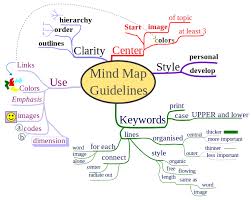
     First, do some brainstorming and then pick an important project or goal that will help increase income.  Some ideas to jump start your thinking process are listed below.   Second, create a plan, you want to get all your ideas out of your head onto paper, and then organized before you begin.   Make it a visual, you want to be able to see your plan  Create a flow chart or do mind-mapping  to produce doable action steps.  Never tried to use mind mapping,  YouTube has some good instructional videos. 

    Here are some ideas to jump start your brainstorming session:

    • Redo your website:  Home page, About page, Product or Services page.  Make sure your copy is compelling.  What will they gain from hiring your or buying your product?
    • Your Opt-In Gift.   Is it old and tired?  Should be something more interactive like a “quiz” or a choice of the best opt-in gift.  Maybe your Tip Sheet  or White paper should be turned into a video.
    • Create more visibility for your business.  At the very least be on YouTube.  If you want to be more professional, start an online radio show or an online TV show.
    • Not using Facebook Fanpage or Twitter – get started.
    • If you have content, turn it into products and generate a new income stream.
    • Turn your content into an online course or create a membership site.
    • Offer Teleseminars or Webinars to attract new clients.
    • Plan a workshop or group program.
    • Clarify your niche.  Are you reaching out to the right audience?  Is your language and imagery appropriate?  This is important if you are not a member of the demographic group you are trying to serve.
    • Get support.  A business or writing coach; someone to help you with technology, join a Meet-Up entrepreneurial group  …… 
  • A Business on the Side. Why Should You Have One?

    Why does someone become a Halfpreneur,  begin a Side Hustle (Pamela Slim’s, author of Escape from Cubicle Nation, term for a tiny, independent venture you do during your free time) or begin a Second Act Semi-retirement career (Nancy Collamer)?   The idea of starting a side business may have arisen from:

    • seeing family or friends lose their jobs and realizing no job was truly secure
    • your own job loss and long term unemployment
    • an early retirement or retirement when you want to continue working and earning an income but you also want to work  fewer hours  at something you enjoy,
    • being one of the many millennials who want a challenge while waiting for the job market to open up.

    The current government shut down may spur some individuals who work for government agencies or for businesses doing business with the government that they too should have a side business.

    CLOSED
    CLOSED

    The reality is that even if we have a full-time job, we are all self-employed.   Even if you are happy and feeling secure in your current position, it may be wise to become a Halfpreneur and start that side business as a form of career insurance.  Your side business  can:

    • provide extra income or a financial cushion.  The extra revenue can go to what you think is important – home repairs, paying down debt, retirement savings, a vacation.
    • serve as a backup plan just in case you lose your job.
    • be an opportunity to experiment with new fields and ideas which along with exercise will keep your brain healthy.

    Once you organize your thoughts, you may discover there are almost limitless possibilities for potential businesses. Contrary to popular thought,  Everyone has skills, experience and attributes that can be used to successfully launch a  small business.  Begin by focusing on something that is in demand, fills a need and has growth potential.  If you can find an under-served niche you will have an easier time getting customers and establishing a reputation.  But don’t waste your time and energy by just starting a business that meets a demand.  This will be your business , choose something that interests you and that you are capable of doing.

    Two warnings!

    • If you have a full time job, make sure you are not prohibited from performing outside work.
    • Check the local and state laws to be certain you can comply with the laws.  For example there may be zoning laws or regulations that food items be prepared in commercial kitchens.  SCORE and  local government small business associations can assist you,

    Finally avoid potential financial and legal problems by:

    • choosing a legal structure for your business, most likely you will operate as a sole proprietor or as an LLC (limited liability corporation)
    • setting up a business bank account
    • checking with a CPA to learn what are your tax requirements.    You’ll also want to know what deductibles you can take.
    • getting any business licenses or permits that are required
  • Retire or Re-tire

    For the past several years, I have thought that it was the baby-boomers, now that they are approaching retirement age, who had a problem with the word and concept, “retirement.”  Recently while cleaning out bookshelves, I found a vintage book, Paths to Power,  from the early days of women’s studies programs.  First published in 1980, Natasha Josefowitz ended her book with a chapter titled “Re-tire to Re-start.” She briefly began with the necessity to plan your retirement, if that is what you wanted to do and her planning advice concerned not only finances, but exercise, nutrition, using your talents, and keeping your mind active.  As for retirement she admitted it could be wonderful if you were using this time period to START something, rather than STOP.  The remainder of the chapter focused on your other option – Re-tire!

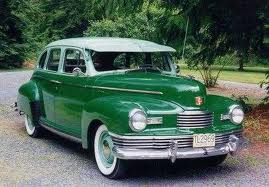
    Re-tire – put some new tires on the old car to make it run like new.  Then roll along or bump along depending on what new roads you decide to travel.  With your experience, she suggested that it may be time to consult, teach, or counsel (the coaching field had not been invented yet) or write.  But if the re-tired vehicle was looking for a more exciting trek, entrepreneurship was among her suggestions.

    Seems at least some of us read about reinventing retirement thirty years ago and promptly forgot about it.  But the seeds were sown.  Maybe this is why Profiting from Passions Coaching (R) is one of my encore careers.

    Originally published in my blog: Reinvent Retirement Jan. 2011


  • Passion, Purpose, and a Happy Life

    Does your work – full-time or part-time need to help you fulfill your purpose in life.  If you can combine your skills, talents, and passion to fulfill needs, you probably have work that is ideal for you, but is this necessary to be happy?  Must you combine all four in your part-time business?   I have been trained in Profiting from Your Passions coaching ® and although passion is in the title, individuals may choose their business niche for a reason other than passion.

    Chris Attwood and Janet Bray Attwood are the creators of the Passion Test, so obviously passion is most important.  Their recent post provides plenty of good information …….

    How to Be Happy in Life- The Most Important Decision You’ll Ever Make

    BY CHRIS ATTWOOD

    “Whenever you’re faced with a choice, a decision or an opportunity,choose in favor of your passions.”     – from The Passion Test

    Janet and I often say the sentence above is the most important part of The Passion Test Process. We ask our Passion Test facilitators to memorize it and use it in their workshops. We repeat it over and over and over again.

    Why?

    Because your passions are the pipelines to your soul. They connect you with your soul’s purpose in life. They are the light guiding you to fulfill your unique and special reason for being alive. As we say in The Passion Test:

    “What you love and God’s will for you are one and the same.”

    It’s not an accident you love the things you love. It’s not an accident you care about the things you care about. Nor is it an accident that when you are disconnected from those things you start feeling miserable and have to drag yourself through your day.

    These are all ways that life gives you feedback, telling you whether you are on the path of your purpose or off. If you listen, you’re passions will always tell you how to be happy in life.

    Finding Your Passion and Using Your Talents

    In the world of business, people talk about “beating out the competition,” but you have an unfair advantage. When you’re aligned with your passions, there is no competition. No one can fulfill you unique role in the world except you.

    The only time you have to worry about “the competition” is when you’re trying to be something or someone other than yourself. When you make decisions based first on money, rather than the things you love and care about most, then there is a real chance you’ll find “the competition” is beating you and you’ll begin to suffer.

    Passion + Skill + Talent + Need = A Purpose in Life

    In the same way that your passions emerge in you from somewhere inside, you are born with certain innate talents. There are things that come easily for you and are difficult for others. Just as it’s not an accident you love the things you love, it’s not an accident you are good at the things you are good at.

    As you get older, you’ll discover that your talents intertwine with your skills–the things you’ve learned to do well through education, training or experience. Now, here’s an interesting point:

    You can make a great living with just your skills and talents–but you will never be fulfilled until these two are aligned with your passions as well.

    We all Share a Common Purpose

    While you have a unique and special purpose in life, there is a common purpose we all share. It’s to serve each other.

    When you discover the reality that “there are no accidents in creation,” you’ll begin to see that the intersection of your skills, your talents, and your passions is where the unique way you can serve others is located.

    Here’s an interesting fact:

    The greater the need of others you’re uniquely able to serve, the more impact you can have and interestingly, the more money you will earn or raise. If you’re Mother Teresa, you may not create great wealth for yourself, but you will still attract millions and millions of dollars (or Euros, yen, etc.).

    And it’s useful to be aware that if you have a great desire to be wealthy, there’s a reason for that. It’s part of the unique role in which you are able to serve. If you don’t have that desire, there’s a reason for that as well. You don’t need to be wealthy to fulfill your special role.

    Every part of your life is designed to guide you to play the role you were born to play in the world.

    You just have to listen and know that we all share a common purpose in life.

    Discover How to be Happy in Life

    It begins by finding your passion. The most important decision you can make in your life.

    That’s the purpose of The Passion Test process.

    We created a modified version of the first step in The Passion Test process that was published in the September, 2013 issue of Success Magazine. They’ve kindly allowed us to make it available to you. Just click the link below to download the article and take The Passion Test again, in a new and fun way.

    The Passion Test for Success

    Thank you for reading this article on how to be happy in life and finding your passion and purpose in life.

    Topics included in this article are:

    Common Purpose

    Purpose in Life

    How to be Happy in Life

    Finding Your Passion


    Copyright © 2003-2012, Chris Attwood and Janet Bray Attwood

    Material on this web site may not be copied or published in other venues without
    showing this copyright notice and including a link to http://www.thepassiontest.com

    -See more at: http://thepassiontest.com/how-to-be-happy-in-life-the-most-important-decision-youll-ever-make-common-purpose-finding-your-passion-purpose-in-life/?inf_contact_key=91e0a611812ade6c6962dfa06704e478fd2004e7a586abed073c0788966ec701#sthash.R4YgrhI8.dpuf

  • Marketing to Your Niche (A Wednesday Spoof)

    In my last blog Anthony Ceseri recommended that for effective marketing  you market to one person at a time.   Of course that one person will be a member of a much larger niche groupm so you create an avatar of your fan, or potential customer.

    Your niche might be a group that shares an interest:  Music, Golf, Scrapbooking, Genealogy, Bridge, Cycling, Painting, Photography, Animals, Social Justice, Hunting, Wines, Anime ……  Or your niche might be based on demographics:  Teenagers, Young Adults, Baby Boomers, Retirees,  Couples, Single Mothers,  New Parents,  Parents Home-schooling their Children, Conservatives/Liberals, Disabled People,  Veterans ……  In other words, you need a group of people who want what you are offering.

    The product or service that you provide should obviously provide value and building relationships is rapidly becoming an important aspect of successful marketing.  It’s about the customers you serve and not about you!  So enjoy this spoof on how to market to young, insecure, impressionable teenage girls.

  • Effective Marketing for the Creatively Self-Employed

    From article by Anthony Ceseri, posted by MaryEllen Tribby May 2, 2013 and  by ThrivingBusiness.com  July 2013.

    Getting in front of people isn’t enough. You have to know HOW to get in front of them, so their initial reaction will be positive and they’ll want to interact with you and be your fan, follower or student. But unfortunately, many business owners, musicians, artists, and other creative people looking to promote things on the web simply don’t take the time to consider this, and as a result they’re left wondering why no one wants to buy what they’re selling. If you want to get anywhere, you have to learn how to market yourself. With that being said, let’s look at 3 important tips for eliciting positive reactions in potential customers, clients and fans.

    1. Speak to One Person
    Of course, as a creative person you want to appeal to the masses. You want a ton of people loving and promoting what you’ve created. I get it. But one thing you have to realize when you’re marketing is it’s best to address one person to increase the odds of getting their attention.

    For example, let’s say you signed up for a band’s email list at one of their gigs. Which of the following opening lines would be more likely to grab your attention as a reader?

    A.  “Hey Guys – We wanted to thank you all for coming out to our last show. We appreciated you guys being there and hope you can make it out to our next show at…”

    OR

    B.  “Hey Bob – We wanted to thank you for coming out to our last show. We appreciated you being there and hope you can make it out to our next show at…”

    Doesn’t the second one feel much more like it’s directed at you, specifically (well, assuming your name’s Bob)? The second one’s much more likely to get your readers’ attention. There’s a subconscious detachment that happens when we read phrases like “hey all you guys.” It makes us feel like just a face in a crowd, and we zone out. But when we’re spoken to directly, we’re much more likely to respond.

    To get good at this technique, a great marketing approach is to create an avatar of your typical fan. Write out the name, age, gender, occupation, etc, of one of your fans. It can be someone made-up, who you feel represents your fan base appropriately, or it can be an actual fan or reader of yours. Every time you write an email, Tweet, or Facebook post, keep that person in mind. Pretend you’re writing to him only and not to everyone on the internet. It’ll help you keep your writings engaging for everyone who reads them, because while saying things like “Hello, Cleveland” is kick-ass on-stage, it just doesn’t apply when you’re marketing yourself.

    2.    Give Value
    Another big mistake a lot of creative people make is they don’t make their promotions about their fans. They make them about themselves. They say things like “We would really appreciate it if you came out to our show. It would mean so much to us.” That’s inwardly focused. It may work on their mom and siblings, but it just won’t appeal to someone who’s a casual observer. In fact, it’ll probably turn that casual observer off, because it’s such a self-serving statement.

    Another phrase I see a lot in the songwriting world is “hey check out my songs, and let me know what you think.” There are two reasons this phrase is a bad idea: 1. Again, it’s self-serving. It’s all about the artist who posted it, which means other people aren’t likely to care. And, 2. It’s disingenuous. They probably don’t really want to know what you think, UNLESS you love it. If you hate their music, they’re not going to want you posting that on their page. I recommend staying away from that phrase altogether in online postings. It does the exact opposite of giving value.

    Instead, talk about the benefits they’ll have by buying your product, or trading their email for one of your freebies. Let them know why it’ll be a positive experience for THEM. People respond to what makes them feel good, so make them feel good. Don’t just talk about yourself. Everyone’s favorite topic is themselves, not someone else. Use that piece of information to your advantage when you’re promoting what you do.

    3.    Build Relationships
    One of the best ways to market yourself and your products is to build relationships. This applies not only to people who can help advance your career, like other business owners, but with your fans, clients or readers as well.

    As far as building relationships with your fans, if you were in the crowd for a convention, for example, wouldn’t you be much more likely to buy a product from the speaker if he engaged you in some pleasant conversation afterwards? And if you get your fans on your email list, you can continue the relationship with them by offering them cool stuff in your emails.

    And as for other business owners or mentors who can help your career along, building relationships with them is key as well. You’ve heard the phrase “it’s all who you know.” Well, start knowing people. But again, it’s about them. Don’t try to build relationships with people by seeing what they can do for you. No one will want to deal with you. Just get to know them. Later on down the line, you might able to ask for things, and it’ll be okay because you’ll have that relationship. But start out by just by getting to know them, and even see if there’s anything you can do for them. If people like you and get to know you, they’ll be much more likely to want to help you succeed.

    The opposite of building relationships is spamming people online. This includes sending emails to people who didn’t ask to receive them and posting your promotions on sites that weren’t looking for them to be posted there. Things like that will only aggravate people, and possibly even get you blocked from the sites you want to be on. You’re doing the opposite of building relationships.

    The problem is, most up-and-comers think in numbers. They think, “That Facebook page has 20,000 Likes. If I post my product there, tons of people will see it, and I’ll be a millionaire!” What’s much more likely to happen, is you’re just going to annoy the owner of the page. Think about how you feel when random people you don’t know post their stuff to your page. Instead, try to develop a relationship with the owner of the page. Maybe he’ll eventually promote your product to his page, if it’s good. And if he doesn’t, that’s fine too.

    Marketing yourself and your ideas is crucial to your success. It’s just as important as knowing the underlying craft of what your business provides. Actually, it’s probably more important, if you want what you’re doing to be more than just a hobby. So use these three tips to start effectively marketing yourself and your ideas to build a strong and thriving community of people who actually want to help you succeed. Have fun and good luck!

    If you’re a songwriter or performer (or want to be) and you’d like a lot of useful information on building a fan base and writing songs, download my free report here: http://successforyoursongs.com/freeoffer/

    Anthony Ceseri is the owner of http://www.SuccessForYourSongs.com, a website dedicated to the growth and development of songwriters of all skill levels.

  • Why Should You Advertise on YouTube?

    If you are running an online business or a business that has an online presence, YouTube is one place where you should be advertising.

    Your YouTube video should provide high content information but be non promotional.  The link to your website or squeeze page should be at the end of the video.  If your goal is to increase your list, you should put in a link to your squeeze page and then to your free product or the item that they will be purchasing.   You can occasionally post your advertising videos to YouTube or you can create a channel to show all your videos you have created about your niche.  

    So a resume writer or career coach might create a channel that offers videos on:  how to write a resume, turn a cover letter into a sales letter, conduct an informational interviews, research companies online, and effectively interview for new positions.

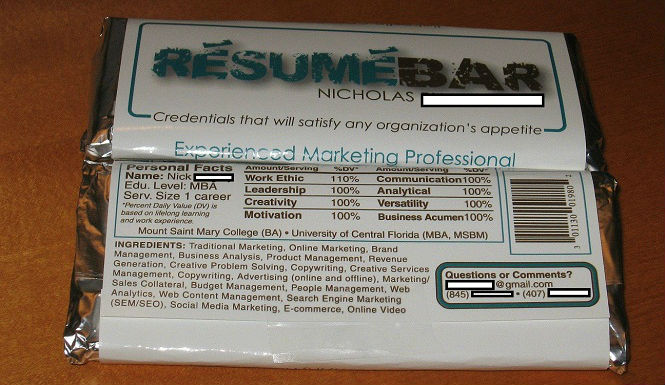
    Untraditional resume
    Not your traditional resume – candy-bar-resume

    There are several types of videos that you can be produced.

    • How To videos are popular and if you do not want to be seen, your voice can voice over the procedure that you videotape.
    • You can do a PowerPoint with voice over or present FAQs (frequently asked questions)  An FAQ video might include screen shots, PowerPoints, images, or you speaking.
    • You will have to get in front of the camera if you want to give a demonstration. 
    • Finally there is the Music and Picture video – a series of pictures concerning your niche with accompanying music.
    Cupcake Quilt
    Cupcake Quilt

    So if you sell quilts and quilting supplies, you may create a How To video on making a quilted Christmas stocking, a PowerPoint on what to look for in fabrics, an FAQ on the best supplies to purchase, a demonstration of how you assemble a quilted jacket and a Music and Picture video of all the quilt designs that you currently sell.

    Producing a quality video (which you do not need to star in) brands you and gives you professional authority.  Potential customers will either hear you or see and hear you.  This builds rapport you’re your potential customers.

    There are other good reasons for advertising on YouTube.

    • It is the 3rd most visited website in the world with about 2 billion video views per day.
    • It is much easier to rank a high on YouTube with a video than on Google with a website.
    • YouTube is a community – it has subscribers, friends, likes, comments, share, and views.
    • And maybe the best reason – it is free, passive traffic.
  • Develop Confidence

    We were not born with confidence, but this trait can be taught, nurtured and built over the years. With self confidence comes better self esteem. Self confidence and self esteem are essential for any person seeking a new job or starting a new business. At any stage in life, confidence is something that can be learned.  Dr. Karl Menninger once wrote,
    “Fears are educated into us, and they can, be educated out.” Confidence can be educated into us too.

    Consider using these steps as the building blocks for greater confidence and self esteem.

    1. Start writing a journal.
    One way to do an effective self-analysis is to start with a personal journal or diary. Write down your perceptions about self-confidence. Write any thoughts that come to mind. Also, try to ask yourself what stops you from getting to a point in your life that you want to achieve.  This practice does not work for everyone, so if, after experimenting with a journal, it does not increase your self-confidence, try another technique.

    2. Do a self-evaluation.

    Learn to assess yourself objectively. Doing so allows you to prevent the constant state of confusion that comes from dependence on other people’s views. Concentrating internally on how you think and feel about your own behavior, lifestyle, work, etc. will provide you a stronger sense of self awareness.
    3. Accept and love yourself. 

    With a self-assessment comes the realization of your weak points. Do not be dissuaded by this discovery. Learn to embrace and accept yourself for who you are as a person. Everyone has his own distinctive abilities, qualities, and characteristics. We are all unique. Never compare yourself to others.

    In your journal, make an inventory of things that make you unique. For example, you can make a list under the title, “What Makes Me Unique.” Write down interests and preferences that make you distinct.

    Be proud of your achievements and revel in your uniqueness. You must learn to accept and be proud of who you are. Only then will you feel your self-confidence shoot up to the skies!

    4.  Concentrate on your strengths rather than on your weaknesses.

    Confidence comes from within. Concentrate on positive things about yourself.Remember the past is over; you can only change the future. Write down ten positive things about yourself. Go through your journal and look at all the positive things about yourself. 

    Concentrate on your potentials. These are the reasons why you love and believe in yourself. Give yourself credit for every positive thing you have written about yourself. Remember, you are somebody special.

    5. Overcome fears and doubts. 

    Some people feel insecure, thinking they can never be successful in anything they do. Such insecurity will only lead to lack of confidence in yourself and in everything you do in your life.

    Keep in mind: If you haven’t tried something, you can’t say that you will fail in it. Just because you never started your own business when you were younger, does not mean that you can never do it.

    6. Motivate yourself.            

    Whether it is for a presentation, an interview, or anything at all, remind yourself that you can do it. Motivate yourself every day; and soon, you will find your confidence level increasing. 

    A helpful way to motivate yourself is by keeping a list of at least five things that you did well for that day. This activity reaffirms your strong belief that you can achieve what you set your mind to accomplish.

    7. Engage in positive self-talk.

    Use positive self-talk as a chance to displace destructive thoughts crowding your mind. When you catch yourself thinking negative thoughts, remind yourself to “stop” and replace them with positive thoughts.

    One good way to crowd out negative thoughts is by reading and listening to positive things. Reading and listening to positive and affirming materials will enrich your abilities and talents to develop your self-confidence.

    Read and listen to inspiring stories of successful individuals. You will discover that a lot of them underwent tough circumstances, had many difficulties and challenges in life, yet they overcame these difficulties and became successful in their endeavors. Many did not find success until they were well past age 50.

    8. Visualize your future success.

    Regularly imagine yourself enjoying success! Feel the excitement, anticipation, exhilaration, and thrill of victory. In order to become more confident, you must picture yourself as a person with high self-esteem. Picture your self tackling a tough challenge and overcoming it with poise and confidence.

    Use your five senses to make the picture in your mind vivid and seem real. Let us say that as part of the application process to teach at a music school, you will have to give a piano recital to the school’s faculty.  You are having trouble relaxing. Imagine your self entering the room and confidently striding towards the piano. Visualize yourself performing with confidence and joy. Imagine your audience clapping their hands and shouting, “Excellent!” Take in the sight, smell and taste of success. Isn’t it exhilarating?

    9. Acknowledge your success.

    Give yourself credit for everything you try. Emphasize the process of achieving, those brave and simple efforts exerted, instead of focusing on success itself as the end product.

    Congratulate and reward yourself each time you do something that makes you feel satisfied. Treat yourself, you deserve it.

    Nurture this feeling by reminding yourself of past successes. In your journal, write the instances where you feel the happiest.  It may be an incident or performance where you felt appreciation and a deep sense of accomplishment. 

    Bask on these memories and draw strength from these. Say this aloud, “If I was able to achieve these in the past, I can achieve more today and in the future.”

    10. Accept and reframe failures.

    It is an indication of a healthy mind if you are able to accept negative aspects of yourself. If you are always crying over the errors that you made in the past, you will never get anywhere.

    Always remember that past mistakes and failures cannot be reversed; what is done is done. Accept that mistakes do happen. Understand that every mistake or failure you make is a step towards success. When you recognize mistakes as an opportunity to learn, you minimize fear of failure and boost your confidence.

    11. Take risks.

    Try doing things that you have never tried before. It is always a challenge to do new things. The mere act of accepting these challenges, whether you become successful or not, adds a tremendous boost in your self-confidence.

    Shrinking from challenges prevents us from learning new skills, discourages us from testing our limits, and forces us to live unexciting lives within our comfort zones.

    People with high level of self-confidence are not afraid of going out and doing things. They may have limited talent or capability; but going out and doing “it” is no problem for them because they feel confident that they will succeed. They are less afraid of committing mistakes and they utilize more opportunities to succeed.

    Self-confident people probably commit more mistakes than those who are not self-confident, but they are most likely to have far more enriching successes because of their confidence in themselves.

    12. Act confidently.

    Your success at nearly every endeavor you undertake is largely affected by your self-image. People who have confidence in their self-worth seem to be magnets for success and happiness. Think confident and act confident.

    13. Attend seminars.

    It is good to attend seminars with professional and motivational speakers offering suggestions and guidance on building confidence. During the lecture, you can pick up tips on public speaking by observing the speaker’s body language and the manner he projects himself.

    14. Recharge regularly.

    Arrange to spend time alone to recharge yourself mentally, physically, and spiritually. Take some time off to relax by yourself in a quiet place

    15.  Build a network of supportive relationships.

    One of the most certain ways to increase confidence is to ensure you have love in your life.  Love and self-confidence increase when you serve other people and when you nurture your relationships with those who help you grow. A person gets a boost of self-confidence from knowing that the Universe/Source/God supports him/her as he/she pursues his/her purpose in life.

    These strategies can help you strengthen and build your self-confidence and self esteem in every stage of your life. Self-confidence can help you in all aspects of your work life: job search, interviewing, getting promotions, handling unemployment, and starting a home-based or small business.  Make use of these strategies and see positive changes in yourself.

  • Why Do We Work? Why Do We Start Businesses?

    Why do we work?   There are many reasons and some psychologists have used Abraham Maslow’s Hierarchy of Needs to explain why we work.  

    Hierarchy - Maslow
    Hierarchy – Maslow

    The basic needs, the physiological needs and safety needs, are at the bottom or the pyramid.  We work for food, safe housing, medical care, and security.  In the middle are our needs for belonging, love, self-identity, and self-esteem.  We may not expect to find love in the work force, but we would like respect in addition to feeling that our jobs match our self-identities and enhance our self- esteem.  The top level needs are for growth and not survival and might include beauty, justice, self-actualization, and knowledge.  According to Maslow we must have the lower level needs met before we can move upward to the higher needs.

     During the Agricultural Age and Industrial Age, most people worked to fulfill their basic needs.  Work was to pay the bills not to give you identity or self-esteem.  With the Information or Postindustrial era, the concept of work changed and we expected our jobs and careers to meet our higher level needs for belonging, self-esteem, and self-identity and maybe knowledge and self-actualization.  Only those who lacked an education worked for the basic needs.

     The Recession that began in 2008 changed things again.  People who once had positions that met their middle and upper level needs now find themselves unhappily working to secure the basics.  But the genie will not go back into the bottle.  Most of us want our work to be more than supplying our basic needs.  There were and are an abundance of books on how to get ahead in the workplace and if that  was not working out, there are the books that tell us how to escape from corporate America and start making money by being who you really are.  In other words, create a business based on something you feel passionate about.

    I teach Self-Assessment and Career Planning as a college course and write resumes.  My students and clients primarily want their careers to meet all their needs and provide them with financial security.  Oops the long-term financial security is no longer part of the social contract.  I also use the Life First – Work Second approach to career planning  that comes from Changing Course.com.  This coaching method asks what do you want your life to look like, before it asks what kind of work/business do you want to do.  It consists of one-three laser coaching sessions to help the client discover how to make money from their passion(s).

    Now I am finding passion to be a tricky component of starting a business.  Does your business have to be based on a passion?  Can it be based on a skill you have or based on a need in the community that you can meet without it being something you are passionate about?  What if your passion will not translate into a business of job – you’re passionate about baseball or opera – but you do not have the talent to work in these fields? (Of course, you might have the ability to write about them)  What about a passion to do anything that will make a lot of money and give you lots of leisure time?  (And there are plenty of websites that promise help you do this)

    Life first –work second.  What do you want your life to look like?  If your leisure time activities are really important to you, you certainly may want a business that provides plenty of leisure time.  If your life is your children  or grandchildren, then work should allow plenty of time with the kids.   Your business may be online, but it does not have to be. 

    Abel Gonzales Jr. works for24 consecutive days, 15 hours per day at the Texas State Fair, frying up a food that he “invented” – fried butter.  You can probably understand how inventing new tasty treats could be a passion, but 24 long days in the heat of Texas!  Abel makes enough in these 24 days for the rest of the year.  More than 11 months to do whatever else he wants .  (From Changing Course –Special Edition 9/15/13)   If creating new fried food sensations may be your passion, check out what has won prizes at the Texas State Fair.  http://www.bigtex.com/sft/Nav/foodinformation.asp

    All that leisure time would fulfill the needs of some of us and be a nightmare for others.   Assessing or knowing yourself is part of Life first.  If you are an Extrovert who gets your energy from being around people or  a person for whom work has always given structure to your life, having lots of leisure time will not fulfill your needs.  If you are a retiree who wants to start a business or are thinking of starting a business when your retire, there are many things you should consider and your need for structured time and time spent with other people are two of those considerations.

    What’s more important?  Money?  Passion?  Leisure?  Meeting some need?  Using your skills or talents?  Let the Halfpreneur know your opinion.

  • The Benefits of Self-Employment

    In addition to the extra money, there are other potential benefits to part-time and full-time self-employment.

    •  Meet interesting people.  Usually your business takes you out into the world or brings interesting people into your office that you never would have met any other way.
    •  Life-long learning.  Learning is valued when you work for yourself.  You get to decide what formal and informal learning is necessary for your success.
    •  Ongoing personal growth.  Your business will encourage you to keep growing and discovering new talents and wisdom.
    •  Talent management.   Self-discovery leads to finding your greatest assets and making the most of them.
    •  Keep your imagination.   You can continue to use your imagination and be rewarded for it.  Your creativity will not just be useful it may be absolutely essential.
    •  Better mental health.  The research clearly shows that problem solving is better for you than complaining about things.
    •  Longevity.  Ongoing research is showing that self discovery, using our skills and talents, solving problems, and staying active especially if combined with less stress and less fast food often leads to a longer, healthier, life.
    •  Learn personal responsibility.  If your parents or teachers did not teach you this essential lesson, a business will.
    •  Be a positive role model.  If you follow your dreams, you set an example to your children and others.  They make take inspiration from you without ever realizing it.
    •  Live your passion and purpose.  People want to be appreciated, useful, and know that their lives have meaning.  Discovering your passion is often a prelude to finding your purpose.   A life inspired by purpose means you have discovered what truly matters to you, makes you authentically happy, and allows you to serve others in great and small ways.