Why start a side hustle? The obvious answer is to earn extra money and that may be the only reason that you want to take on extra work. The end of unemployment compensation, wanting to purchase a house, concern about retirement savings, the current state of the economy could be your motivation. But if you have a job and family responsibilities, you want to pick a side hustle that you can do from home on your computer.
And there can be more to it than a need for income. You may have developed a skill or talent that you want to share and get paid for; you are wondering if you would find another industry more fulfilling, but you are not ready to leave your current career at this time; you already own a small business and your income is unpredictable. Flexibility and low entry cost is what you are seeking.
Since I wrote What is a Halfpreneur almost 13 years ago, what besides my age and the world have changed? Well, the word “side hustle” is the term that most people now use to encompass the many ways of earning money from participation in anything from the gig economy to starting a business. However, Professionals often use the term “gig”, which supposedly sounds more professional. Seniors may not use the word hustle but simply call their work part-time or per diem jobs. Technology and social media have brought into being some new hustles and research indicates that having two or more side hustles has become increasingly common and that this trend will likely continue to increase across the working life span.
Demographics
As might be expected, the younger generations are more likely to have side hustles, including more than half (53 percent) of Generation Z (ages 18 to 26) and 50 percent of millennials (ages 27 to 42), compared to 40 percent of Gen X (ages 43 to 58) and 24 percent of Boomers (ages 59 to 79). However, side hustles can lead to starting a small business and the 45 to 55 age group is biggest age group starting businesses in the U.S. today, at 39 percent, with the 55 to 65 age group following closely behind at 38 percent.
Clicking on any of the ideas will bring up the information on all of them. I have doubts about some of the income potentials that he lists, and I suggest you do additional research before starting any of them. A couple of paragraphs is not enough to adequately describe how to earn money on these endeavors or the problem you may face. For instance, blogs need to have advertisers or merchandise for sale, zoning laws may prevent you from having yoga classes in your garage or doggy daycare on your property. Anyone can call themselves a coach, using Udemy a 10-hour course may provide you with a certification, but all you have is information and handouts. Little or nothing is said about the listening skills and powerful questions that credentialed coaches use.
If you are looking to make some money though, you can certainly use this list to jump start your own creativity.
The books and the workshops are out there. Monetize your passion…. Do What You Love and the Money Will Follow …. Start Your Business Now ….. Making a Living Without a Job….. So how do you actually do this?
Step 1: Brainstorm. Take a moment, or hours, or even days to write all your ideas down. Do not think about what will work and what might not work.. This is your brain storming session and you are allowed to write down whatever comes to mind. Turn your censor off.
Step 2. Make a List. Take the list of ideas from your brain storming session and write each idea on a separate piece of paper or index card. Use as many cards as you need. Each idea should have its own card.
Step 3: Categorize. Look at each of your ideas, and sort them out, put them in categories. Are any of them similar? Do some of them go naturally together so they all might be done within one business? For example, you love to cook and you love to help people with dietary restraints find foods and recipes they can use. These two ideas would go in the same pile. The cards that state your love of doing stained glass and decorating your home for the holidays will go into separate piles.
After someone dies their family is left with the accumulated possessions of a lifetime. After selecting the items that have particular meaning or value to them, they must find a way to sell the items so the house can be sold or the apartment cleaned out and rented. Usually they will hire an auction service to run an estate sale. This means that everything gets sold but some things will be sold very cheaply.
So how can you make money? To get started, buy the cheap remains from the auction service directly or at a rummage sale they may have after the auction. Once you know the market and business well, you can approach families to buy the entire contents of the home of the deceased.
So what if you want to start a part-time business but you don’t really want to do the work of actually starting a business. Maybe you want a business, but you are not sure you have what it takes. You think that you would enjoy selling something that you believed in, but what if you did not?
Consider joining the 15.6 million Americans who have turned to direct selling for part-time income or even as a full-time career. Why is direct selling so popular? Besides providing you with a product and training, surveys indicate that most consultants choose direct selling because it’s uniquely flexible. You can:
be your own boss
set your own hours
work around other priorities such as providing care for children or aging family members
begin with a very limited investment and it is one of the few work ventures where women earn dollar for dollar what men earn
drop out easily, if you discover that it is not for you.
Since direct selling is easy to enter and leave, it is an excellent choice for the halfpreneur that is exploring their options or the reluctant halfpreneurs – those who feel a need to start a business not because they really want to be in business but they need extra cash and/or there is some obstacle to finding another job. For instance, you only want to be in business:
to bring in some extra money to afford a vacation or to pay down some debt
because it is a flexible way of providing income while you care for family members
while you are unemployed, so there will be no gaps on your resume
for something fun to do while you ease into retirement
to meet new and interesting people
If you’re interested in finding a direct selling organization to be a part of, the best places to start are the Direct Selling Association’s website and DirectSelling411.com. http://www.directselling411.com/forms/CompanyFormPublicMembers/ provides information on the companies that sell specific products and services. Direct selling is no longer just cosmetics and vitamins. There are real estate services, educational services, home appliances, telecommunication, craft supplies, and wine – to name a few. But it is important to like the products you’re selling, and find a company that can give you a solid support system for a fast, smooth start.
Finding new job can be difficult. Even jobs that once only required that you fill out an application may now require a resume. I have met hairdressers, nurse’s aids and welders who have needed a resume. By requiring a resume, the hiring manager has fewer but more committed applicant to screen. Of course, those seeking professional positions need resumes that showcase their achievements and key skills.
It is easy to get a professional looking template online or even from the applications that came with your computer’s word processing system. Looking good is easy but getting one’s experience on one or two pages that impress a prospective employee is not easy in a crowded, competitive market. After trying it for themselves, many people will call a Resume Writer and pay to have the resume written.
Resume
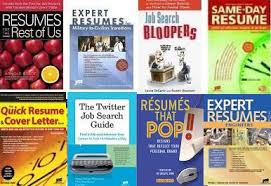
Resume writing is an easy field to enter. If you are curious about people, write reasonably well, able to do word processing, and proofreading, you can probably learn to write resumes. Start you training at the local library by borrowing some of their books. Pay attention to the copyright dates, as resume styles have changed dramatically in the last 20 years. Continue by looking at some of the books available at bookstores or on Amazon. There are plenty of example of resumes on line, but just because someone posts resumes online does not mean they are exemplary resumes. As a resume writer (it is one of my long-standing halfpreneurial ventures) I use the resumes on the web when I am writing a resume for a field with which I have little familiarity. Recently that included a child model and a veteran with 20 years of artillery experience seeking a position in construction or facilities maintenance.
Resume writers can work from home. The basics for starting the business are a computer, laser printer, and telephone. A website and business listing in the phone book will contribute to your professional image.
Very reasonably priced training is available from American Artists and Writers Inc. http://www.awaionline.com/resume/p/ for $99.00 and from http://resumebiz.com/# Teena Rose offers her book for $44.95. Both books will help you begin to write resumes and set up your business.
If you are serious about resume writing consider seeking certification from:
Read and stay current. The NRWA offers a monthly newsletter and there are blogs and articles to follow online.
In addition to resume preparation, you can offer cover letters, Reference sheets, Bios, and resumes formatted for Applicant Tracking Systems (ATS) http://tinyurl.com/lddw2oh. You can branch out and offer interview coaching, job search coaching, and career coaching.
No business is without pitfalls and for a resume writer income may not be reliable and your local market can have an effect on what you can charge. The advantages of resume writing include working from home, low start up costs, high income potential, and meeting interesting people.
So you love to cook. Can you turn it into a lucrative part time business?
Catering for small events would be one idea, but it probably would be a great deal of work: food purchase and preparation, cooking, delivery, clean-up.
But you can share your love of cooking and not have to do very much cooking.
Teach a Cooking Class
If you have a large kitchen or have use of a large kitchen you can offer cooking classes. If you plan ahead you can teach your cooking class in a night program for adults, here we call them “Night Life” and a variety of cooking classes are held at the vocational high school. Depending on the class, the cost of the class might range from $15.00 – $50.00.
If you have expertise in some area of cooking: nutrition, weight loss, cooking for diabetics, great meals for folks on low sodium diets, gluten-free deserts …. You get the idea. You could teach classes or you could offer coaching or a tele-seminar series.
Even if you have no specialty, just some really good recipes, you can become an author. Books can now be easily self-published. Sell your book at your classes. Teach a class based on your book. Offer a discount on the book to those who sign up for your next series of classes.
Publishing a Kindle book will also establish you as an author. Offering a free cookbook with 10 or 20 recipes can be a way to build a list for your future coaching or tele-seminar business. Or your business can just be selling Kindle cookbooks. When I last checked Amazon, most Kindle cookbooks were selling for $2.99. What kind of Kindle cookbooks were being sold?
Prepare your Paleo food in a slow cooker
Paleo Food cooked in Slow Cookers
Slowly cook the food your ancient ancestors loved while you put in your eight hours in some 21st century techno cave
Salad in a Mason Jar
Salads in Mason Jars
Veggie salad, bean salads, fruit salads salads……
Dump Cake
Dump Cakes
They seem to begin with cake mixes and then other “stuff” gets dumped in.
Dump Dinner
If these are not among your specialties with a little research, you could probably become an authority. Or become one of the first authors providing recipes for dump dinners. I think they used to be called soups and stews!
You can publish both Kindle and print editions and you can increase the sales on your books by starting your own affiliate program so other people can earn money for promoting your book on their blogs and websites or recommending it to their social media fans or email subscribers. With an affiliate program you do not have to pay out until after the sale is made. Two companies that can help you set up an affiliate program are www.topwebcart.com and www.clickbank.com. Whichever you choose, you affiliate software will automatically calculate the commissions you owe each affiliate.
Authors have credibility. And even though publishing a cookbook requires limited writing ability, you are an author! If you are comfortable with public speaking, you may want to seek out opportunities to be a guest speaker. Consider groups who have monthly meetings and Meetup groups. After you give a talk or give a recipe demonstration, attendees will want to buy your book. Some Meetup groups charge admission and give their speaker half of the admission fees.
If you are running an online business or a business that has an online presence, YouTube is one of the social media sites that you should be using, Why?
1 billion users (globally)
7 million US visitors per month
59% of all Hispanics are on YouTube
55% of all women ages 18-54 are on YouTube
62% of all men ages 18-24 are on YouTube
54% of all teens are on YouTube
YouTube reaches more U.S. adults aged 18–34 than any cable network
Plus You Tube
is a community that like other social media has subscribers, friends, likes, comments, share, and views.
makes it much easier to rank a high on YouTube with a video than on Google with a website.
is free, passive traffic
.Your YouTube video should provide high content information, which gives you professional authority. You do not need to star in your video. As long as potential customer either see or hear you, you will build rapport with potential customers.
What sort of video should you make? Consider
A how-to video that uses PowerPoint, screen shots, or demonstrations
A music and picture video which is a series a pictures with accompanying music that is targeted to your niche.
Keep in mind that your video should be non-promotional but that you can add the link to your website or squeeze page at the end of the video.
For more info on using You Tube, see my Sept 19 2013 post or
From one of my recent posts you might think that I consider social media a time waster but for business owners. It certainly may be if you do not stay focused and blur the lines between work and play. But it is becoming increasingly important to become involved in social media if you are a small business owner. Since social media can take up a considerable amount of time and resources, you need to plan accordingly. One aspect of planning is to look into the demographics of each social network since there are many social networks and some may better fit your niche than others.
Facebook is probably the best known, and it is the largest social network globally but to my surprise I discovered that based on overall users Google + is the largest US social medic network. So I will start a series of posts on the demographics of various social media starting with Google +.
Google + has 5 billion Active users (globally) and while not all are active on the network, their presence on the network personalizes their search experience.
26.1% of women and 24.5% of men have a Google+ account.
By age globally (from the Dec 10, 2013 Global Web Index Study): 16-24 (20.7%), 25-34 (24.9%), 35-44 (24.9%), 45-54 (17.8%), 55-64 (11.7%)
5 billion photos uploaded each week
Most importantly for business owners, Google Plus generates much more brand engagement than you might think. Recently Forrester studied more than 3 million user interactions with more than 2,500 brand posts on seven social networks. Brands Google Plus posts generated nearly as much engagement per follower as their Facebook posts — and almost twice as much engagement per follower as their Twitter posts.
If you want to learn more or put your business on Google Plus, here are two videos to get you started.