Author: Mary Ann

  • Become a Resume Writer – A Halfpreneur Who Helps Find Jobs for Other People

    Finding new job can be difficult.   Even jobs that once only required that you fill out an application may now require a resume.  I have met  hairdressers, nurse’s aids and welders who have needed a resume.  By requiring a resume, the hiring manager has fewer but more committed applicant to screen.   Of course, those seeking professional positions need resumes that showcase their achievements and key skills.

    It is easy to get a professional looking template online or even from the applications that came with your computer’s word processing system.  Looking good is easy but getting one’s experience on one or two pages that impress a prospective employee is not easy in a crowded, competitive market.   After trying it for themselves, many people will call a Resume Writer and pay to have the resume written.

    Resume
    Resume


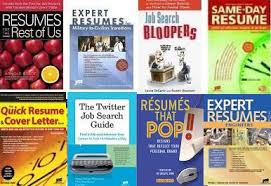
    resume booksResume writing is an easy field to enter.  If you are curious about people, write reasonably well, able to do word processing, and proofreading, you can probably learn to write resumes.   Start you training at the local library by borrowing some of their books.  Pay attention to the copyright dates, as resume styles have changed dramatically in the last 20 years.  Continue by looking at some of the books available at bookstores or on Amazon.   There are plenty of example of resumes on line, but just because someone posts resumes online does not mean they are exemplary resumes.  As a resume writer (it is one of my long-standing halfpreneurial ventures) I use the resumes on the web when I am writing a resume for a field with which I have little familiarity.  Recently that included a child model and a veteran with 20 years of artillery experience seeking a position in construction or facilities maintenance.

    Resume writers can work from home.  The basics for starting the business are a computer, laser printer, and telephone.   A website and business listing in the phone book will contribute to your professional image.

    Very reasonably priced training is available from American Artists and Writers Inc.  http://www.awaionline.com/resume/p/  for $99.00 and from http://resumebiz.com/#      Teena Rose offers her book for $44.95.  Both books will help you begin to write resumes and set up your business.

    If you are serious about resume writing consider seeking certification from:

    Read and stay current.  The NRWA offers a monthly newsletter and there are blogs and articles to follow online.

    In addition to resume preparation, you can offer cover letters,  Reference sheets, Bios, and resumes formatted for Applicant Tracking Systems (ATS)    http://tinyurl.com/lddw2ohYou can branch out and offer interview coaching, job search coaching, and career coaching.    

    No business is without pitfalls and for a resume writer income may not be reliable and your local market can have an effect on what you can charge.  The advantages of resume writing include working from home, low start up costs, high income potential, and meeting interesting people.

    resume books 2

  • How to Share Your Love of Cooking Part-time and Profitably

    So you love to cook.  Can you turn it into a lucrative part time business?

    Catering for small events would be one idea, but it probably would be a great deal of work:  food purchase and preparation, cooking, delivery, clean-up.

    But you can share your love of cooking and not have to do very much cooking.

    Teach a Cooking Class
    Teach a Cooking Class

    If you have a large kitchen or have use of a large kitchen you can offer cooking classes.  If you plan ahead you can teach your cooking class in a night program for adults, here we call them “Night Life”  and a variety of cooking classes are held at the vocational high school.  Depending on the class, the  cost of the class might range from $15.00 – $50.00.

    If you have expertise in some area of cooking:  nutrition, weight loss, cooking for diabetics, great meals for folks on low sodium diets, gluten-free deserts …. You get the idea.  You could teach classes or you could offer coaching or a tele-seminar series.

    Even if you have no specialty, just some really good recipes, you can become an author.  Books can now be easily self-published.  Sell your book at your classes.  Teach a class based on your book.  Offer a discount on the book to those who sign up for your next series of classes.

    Publishing a Kindle book will also establish you as an author.  Offering a free cookbook with 10 or 20 recipes can be a way to build a list for your future coaching or tele-seminar business.  Or your business can just be selling Kindle cookbooks.   When I last checked Amazon, most Kindle cookbooks were selling for $2.99.  What kind of Kindle cookbooks were being sold?

    Prepare your Paleo food in a slow cooker
    Prepare your Paleo food in a slow cooker


    Paleo Food cooked in Slow Cookers   

    Slowly cook the food your ancient ancestors loved while you put in your eight hours in some 21st century techno cave


    Salad in a Mason Jar
    Salad in a Mason Jar


    Salads in Mason Jars 

    Veggie salad, bean salads, fruit salads salads……


    Dump Cake
    Dump Cake


    Dump Cakes

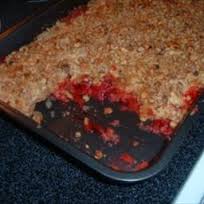
    They seem to begin with cake mixes and then other “stuff” gets dumped in.


    Dump Dinner
    Dump Dinner

    If these are not among your specialties with a little research, you could probably become an authority.  Or become one of the first authors providing recipes for dump dinners.  I think they used to be called soups and stews!


    You can publish both Kindle and print editions and you can increase the sales on your books by starting your own affiliate program so other people can earn money for promoting your book on their blogs and websites or recommending it to their social media fans or email subscribers.  With an affiliate program you do not have to pay out until after the sale is made.  Two companies that can help you set up an affiliate program are  www.topwebcart.com and www.clickbank.com.   Whichever you choose, you affiliate software will automatically calculate the commissions you owe each affiliate.

    Authors have credibility.  And even though publishing a cookbook requires limited writing ability, you are an author!   If you are comfortable with public speaking, you may want to seek out opportunities to be a guest speaker.  Consider groups who have monthly meetings and Meetup groups.  After you give a talk or give a recipe demonstration, attendees will want to buy your book.  Some Meetup groups charge admission and give their speaker half of the admission fees.

    (more…)
  • Why Your Business Should Be on YouTube

    If you are running an online business or a business that has an online presence, YouTube is one of the social media sites that you should be using,   Why?

    • 1 billion users (globally)
    • 7 million US visitors per month
    • 59% of all Hispanics are on YouTube
    • 55% of all women ages 18-54 are on YouTube
    • 62% of all men ages 18-24 are on YouTube
    • 54% of all teens are on YouTube
    • YouTube reaches more U.S. adults aged 18–34 than any cable network

    Plus You Tube

    • is a community that like other social media has subscribers, friends, likes, comments, share, and views.
    • makes it much easier to rank a high on YouTube with a video than on Google with a website.
    •  is free, passive traffic

    .Your YouTube video should provide high content information, which gives you professional authority.  You do not need to star in your video.  As long as potential customer either see or hear you, you will build rapport with potential customers.

    What sort of video should you make?  Consider

    • A how-to video that uses  PowerPoint, screen shots, or demonstrations
    • A music and picture video which is a series a pictures with accompanying music that is targeted to your niche.

    Keep in mind that your video should be non-promotional but that you can add the link to your website or squeeze page at the end of the video.

    For more info on using You Tube, see my Sept 19 2013 post or

  • Google + and Your Marketing Strategy

    From one of my recent posts you might think that I consider social media a time waster but for business owners.  It certainly may be if you do not stay focused and blur the lines between work and play.  But it is becoming increasingly important to become involved in social media if you are a small business owner.  Since social media can take up a considerable amount of time and resources, you need to plan accordingly.  One aspect of planning is to look into the demographics of each social network since there are many social networks and some may better fit your niche than others.

    Facebook is probably the best known, and it is the largest social network globally but to my surprise I discovered that based on overall users Google + is the largest US social medic network.  So I will start  a series of posts on the demographics of various social media starting with Google +.

    • Google + has 5 billion Active users (globally) and while not all are active on the network, their presence on the network personalizes their search experience.
    • 26.1% of women and 24.5% of men have a Google+ account.
    • By age globally (from the Dec 10, 2013 Global Web Index Study): 16-24 (20.7%), 25-34 (24.9%), 35-44 (24.9%), 45-54 (17.8%), 55-64 (11.7%)
    • 5 billion photos uploaded each week
    • Most importantly for business owners, Google Plus generates much more brand engagement than you might think. Recently Forrester studied more than 3 million user interactions with more than 2,500 brand posts on seven social networks. Brands Google Plus posts generated nearly as much engagement per follower as their Facebook posts — and almost twice as much engagement per follower as their Twitter posts.

    If you want to learn more or put your business on Google Plus, here are two videos to get you started.

    Easy to Follow Google + for Business Guide


    How To Set up Your Google + Business Page


  • Social Media: The Great Time Waster

    While it’s true that social marketing is a powerful technique that all online (and offline) business owners should explore, it’s also true that much of what we do on these sites is most definitely not work.  But when you make your living online, it’s far too easy to justify time spent on social media as being “work.”

    Yes, you may have to market your business on Facebook, Twitter, and LinkedIn, but you are wasting time when you just can’t pull yourself away from that Facebook game that has your attention, or the beautiful photos of yummy desserts you want to make.  Even agonizing over the special access to some marketing guru’s new product (that has no relationship to your business) that will be at a special price but only until midnight, is a time waster.

    Schedule Your Day

    Not all social media is bad. It’s a great way to stay in touch with far-flung family and friends, and yes, it’s an important business-building tool as well. So rather than try to eliminate it all together,  make it a regular, scheduled part of your day.

    For example, catch up on your Facebook feed over coffee, then log out and get to work. Or browse Pinterest while you eat lunch. For actual work-related social media tasks, schedule a time during the work day to log in, update your status, respond to questions, and check up on your competitors. The key here is to actually schedule this as you would any other business-related task, and not to let this “work time” turn into a chat with a friend or relative..

    Segregate Your Tools

    One way successful entrepreneurs separate work from play is by the tools they use. When on the computer in the office, they avoid Facebook and other social media sites because they’re working. Instead, they limit their use of social media to off hours by only visiting the sites on their mobile phones or tablets.

    By adopting this type of policy, you create a boundary in your own mind. After a few weeks of practice, you’d no more think of hopping on Facebook from the office computer than you would consider wearing your bathrobe to the grocery store. The two activities just don’t go together.

    Let Someone Else Handle It

    If you really can’t stay focused on work once you’ve logged into Pinterest or Facebook (they’re just so distracting!) consider letting someone else handle your social media accounts. You can create updates ahead of time, then simply turn them over to a virtual assistant to schedule. Then once a day or so (maybe from your iPad rather than your office) you can log in and respond to your followers.

    Take a Sabbatical

    Finally, if you’re not using social media as a marketing tool, consider taking a sabbatical. Simply make a deal with yourself that you will not log in or check any social media site for a month or a week or even just for a day. You might just be surprised to see how much time you really do waste playing Candy Crush.

    If you eventually decide that you should be using social media as a marketing tool (and you probably should be), adopt the “Schedule Your Day” model or the “Segregate Your Tools” model  right from the start.

    Overcome Distractions; Stay Focused

    This is the third and last (for now) of my posts on overcoming distractions. To stay focused on your business be sure to read my two previous posts on Time Management and Taming the Email Monster.

  • Time Management Techniques for Small Business Productivity

    If you are looking for a better way of managing your time, colleagues, friends with a background in the business world,  and Google will suggest several techniques such as: Getting Things Done. The Pomodoro Technique. Time boxing. Stephen Covey’s urgent/important matrix.

    But which ones are best for cutting through the overwhelm and really managing your to-do list? Well, like most things, which system or technique works best is mostly a matter of personal choice. However, there are some things you should know about each one that might make choosing easier.

    Getting Things Done

    Developed by David Allen, Getting Things Done, or GTD, is a system designed to help you know at a glance exactly what you should be doing right now. The idea is simple: For every item that lands in your “inbox” (which might be email, a phone call, a letter, or just a passing comment from a spouse) you make an immediate decision to either do it, delegate it, file it, defer it, or trash it.

    Once you’ve made your decision (based on the task itself and the time it will take to complete) you either do the thing or note it in your “trusted system” for retrieval – and completion – later. Devotees of GTD spend hours developing their own trusted systems, which can consist of paper planners, expensive software, or just a few note cards and a pen. In GTD, the tools are entirely up to you, it’s the methodology that matters.

    The Pomodoro Technique

    This method is a boon to those who find themselves easily distracted. The principle is simple: Set a timer, and get to work. Typically, proponents of the Pomodoro Techniqe use a simple kitchen timer (often shaped like a tomato – or pomodoro, in Italian) set for 25 minutes. During that time, they focus only on the task at hand. When the timer goes off, they take a 5 minute break, then set the timer for another 25 minutes.

    Each 25-minute set is called a pomodoro. Once you’ve completed four pomodoros, you take a 20 minute break, before beginning the cycle again.

    Time Boxing

    Time boxing is a simple technique  that is often used in project management and software development for tracking  progress.  It can easily be adapted to a small business or to personal use.  Time boxing is about fixing the time we have available to work on a task and then doing the best we can within that time frame.  This method can help  you avoid procrastination, circumvent perfectionism, boost creativity, and better utilize gaps in your day.

    Since we often procrastinate when we have small tedious tasks to do or uninteresting projects to accomplish.  So set a specific amount of time and Time box all the tasks to get them done within that time period.   If your tendency is perfectionism, then setting a specific amount of time and making a decision not to exceed that amount of time means you do the best job you can do in that time period.

    On the other hand, if you have a project to do complete, but you don’t know where to start or how much time it will take and maybe you are overwhelmed, give yourself a time period of 30 – 120 minutes (or a time range that works for you) and commit to working on it for that entire time period.  This commitment is to work on the project, not to complete it or reach any milestones.  In this case if you become focused on the task, are making progress, and have the time, feel free to exceed the time range you originally intended.  Often we have gaps in our day between appointments and other commitments.  Use these gaps as time boxes to do tasks that realistically fit the allotted time.

    Urgent/Important

    Stephen Covey’s brainchild provides an easy way to prioritize your work. Begin by dividing a piece of paper into four sections (two rows by two columns) and assigning a level of urgency/importance to each quadrant. The upper left is important but not urgent, the upper right is urgent and important, the lower left is neither urgent nor important, and the lower right is urgent but not important.

    Now take your to-do list and assign each item to a quadrant. For example, grocery shopping might be important but it’s probably not urgent. Fixing your client’s broken website is both important and urgent. Answering the phone when your mother calls for the fourth time is urgent, but not important.

    By dividing up your task list according to these priorities, you can easily see what you need to be working on next, and what can wait until the urgent and important items are cleared from your schedule.

    Entrepreneurs who use these techniques or other available strategies to manage their time get more work done than many others do.   Of course, these methods can and should be tweaked to fit your own needs and lifestyle. The bottom line is this: you have to find a system that works for you, and that is compatible with your style.  An incompatible technique will become another distraction that will cause you to lose focus rather than become the productive business owner you know you can be.


  • Tame Your Email Monster

    Email Monster
    Email Monster

    Is the Email Monster one of your business problems?  How much time do you spend reading and responding to – or simply deleting – emails? How much unread email currently clutters your inbox? If you’re like most entrepreneurs, the answer (in both cases) is far too much!

    In fact, if you were brave enough to actually time yourself, you’d very likely find you spend two or even three hours each and every day just dealing with email. No wonder you feel like you don’t get anything done. You need some strategies for building an email system that will tame the monster.

    Auto-File Your “To Read” Emails

    We all do it. We open an email, realize it’s a newsletter we love, an important announcement, or information about an upcoming event, and we close it with a well-intentioned, “I’ll read that later.” The trouble is, when later comes, we either can’t find the email, or don’t even remember that we wanted to read it.

    What if you had a folder on your computer where all your “to be read” emails waited just for you to come by and discover them again? How empty would your inbox be then? Through the power of filters and folders, just about any email client can take care of this task for you.

    Simply set up a folder called “To Read” or something else equally clever, then create an email rule or filter (as Gmail calls them) to deliver certain messages to that folder when they come in. Make a rule for your favorite online newsletter, email from your college alumni association, your local chamber of commerce, or even your sister.

    But here’s the trick to it: You have to actually schedule time to go and read these emails. Don’t let them just pile up in there, because all that does is move the problem from your inbox to your “to read” folder. Make time to read them, then respond, file, or trash accordingly.

    Turn off Notifications

    Are you easily distracted by email? You’re not alone. That little red number declaring the number of unread emails, or the pretty little chime that announces the arrival of a new message is an invitation to click over and see what’s new.

    Turn it off. In fact, turn off the automatic checking for email if you can. That way you can purposefully decide when to go read your email, rather than being notified of a new message every 5 minutes.

    Unsubscribe

    Chances are you’re on multiple mailing lists – and most of them you probably never read.

    Click the unsubscribe button. Be ruthless. You can always sign up again if you miss the content, but for now, eliminating those emails from your inbox will save you a lot of time and trouble.

    Email Ninja
    Email Ninja

    Getting a handle on email is one of the toughest things for busy small business owners, but with a little planning and some self-discipline, you can start using email as the powerful tool it is.  As a email ninja your old monster will no longer be stealing much of your time.

  • Happy Labor Day

    1880's

    By the 1880’s life in the United States was changing from agrarian and small town to industrial and urban.   Some farmers were the original “halfpreneurs” doing both farming and running a small business (making carriage wheels, barrels, rope, from their barn or house.  In the small towns and cities, most business were run by one person or a family, things were changing.    With the growth of the industrial revolution came factories, and  a need for workers to run the machines, fix the machines, build the factories, build the roads for workers and materials to get to and from the factories.  Manufactured goods meant for the first time ever the ordinary person might buy all the premade clothes or shoes they could afford.  The day when only the self-employed tailor or shoe-makers could outfit you had come to an end.  Of course the need for a skilled tailor or cobbler never went away, but if you need one today, they might be difficult to find.  In the 1880s organized labor began to call for a holiday to celebrate the work of U.S. workers.  In 1894, Congress declared Labor Day, a national holiday.

    Consultant, picture image

    But if you are reading this blog, you probably have some type of small business of your own or want to start one.  The U.S. laborer working for organized labor certainly contributed to the building of this country, but so didn’t the village shop owner or crafts person .  So if you are one of their successors (or want to be) with your online goods or services  or a craft or service you provide from home or “office”  don’t forget to celebrate your labors as well for you may have discovered what the “employed” have never considered or taken seriously.

    ” Your real security is yourself.  You know you can do it, and they can’t ever take that away from you.”   — Mae West

    “People are always blaming their circumstances for what they are.  The people who get on in this world are those who get up and look for the circumstances they want, and, if they can’t find them, make them.”     — George Bernard Shaw

    “No amount of money, no matter how much it is, will ever compensate you sufficiently for remaining in a job that is drudgery and robs you of your spirit, or one that prevents you from fulfilling a dream.”     — John Kehoe

    “You miss 100% of the shots you never take.”     —  Wayne Gretzky

     “A musician must make music, and an artist must paint, and a poet must write, if he is to be ultimately at peace with himself.”    — Abraham Maslow

     “There is only one success – to be able to spend your life in your own way.”     — Christopher Morley


                                    So ……………………….

    labor day 14

  • Three Reasons Why a Halfpreneur Should Write a Book

    You have looked at the books on Kindle or on the shelves of a book store and think  ” I should be able to write a book about that.”  Well you probably can and should.  If you are a halfpreneur there are three good reasons to consider writing that book.

    1)   A book can generate income for you.  New clients will come from those who read your book and decide that they want to work with you.  Your e-book can contain an offer for free additional information;  at the cost, of course, of their having to give you a valid email address.  Your book becomes a way of list building.  Ever wonder why there are so many low priced and even free e-books out there?  The book is not what will make money; it is the list or the potential source of clients/customers that is of value.

    2)  A book can launch your business or a new business. Once you publish your book, digitally or traditionally, your readership  may want more information from you, or the opportunity  to talk to you.  A book is a powerful statement of your authority in your niche.

    3)  A book is a source of passive income. If you are working hard in your full-time job and as a halfpreneur, but income is not as regular or as consistent as you would like,  a book is means of passive income.

  • Is Your Niche New Age?

    Just spent some time scanning the ads in a free monthly “New  Age” magazine.   Besides the usual ads for massage, Reiki, and Yoga classes , creative entrepreneurs have created a variety of trainings and certifications.  Is your next career Ayurveda,  Bodywork,  Holotrophic Breathwork, Therapeutic Sound Healing or Vibrational Light Healing?  There are Herbal apprenticeships and certifications to do Angel Readings and Angel Therapy or become an Akashic Record Practitioner.

    new age

    Looking for more creative, spiritual ideas. There are practitioners offering Hope and Healing Counseling,  Aroma Therapy, Herbal Medicine, Thermography, Equine Massage, Spiritual Guidance,  Psychic Intuitive Life Coaching, Past Life Regression,  Angel Readings, Angel Therapy, Hypnotherapy,  Soul Clearing, Chakra Clearing, Tarot Card reading,  Soul Retrieval,  Acupuncture, EFT, Pranic Healing,  Shamanic Energy Healing, Plant Spirit Medicine, Astrological readings, Intuitive Spiritual Counseling, Pet Reiki, Animal Communicator, Relocation Astrology, Dowsing , Aura Photography, Ghost Removal, Financial Consulting, Money Coaching, and Psychic mediumship.   Some of these practices do require specific training but others have “no entrance requirements;” only the confidence that you can do the work.

    For the holistic or “spiritual” halfpreneur there are many paths to part-time or full-time income.

    This New Age niche not only pays for services but apparently buys  Nature and Fantasy paintings, Herbs, Medicinal mushrooms,  gem stones, jewelry, incense, soy candles, and Rejuvenizers (I don’t know what they are made of but they protect you from EMFs, the damaging frequencies from your computer, cell phone, TV, and wireless internet, as well as from other people’s negative energy!)