Category: Uncategorized

  • Why Should You Advertise on YouTube?

    If you are running an online business or a business that has an online presence, YouTube is one place where you should be advertising.

    Your YouTube video should provide high content information but be non promotional.  The link to your website or squeeze page should be at the end of the video.  If your goal is to increase your list, you should put in a link to your squeeze page and then to your free product or the item that they will be purchasing.   You can occasionally post your advertising videos to YouTube or you can create a channel to show all your videos you have created about your niche.  

    So a resume writer or career coach might create a channel that offers videos on:  how to write a resume, turn a cover letter into a sales letter, conduct an informational interviews, research companies online, and effectively interview for new positions.

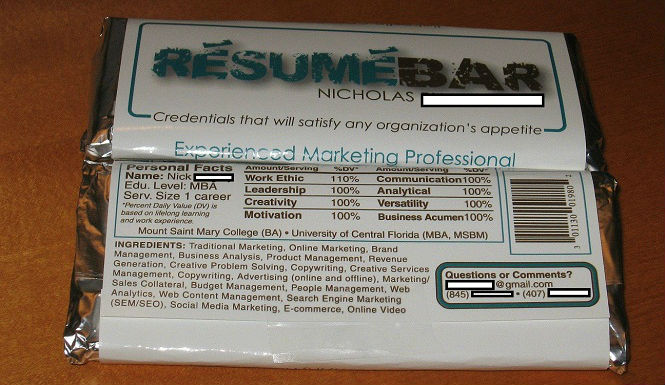
    Untraditional resume
    Not your traditional resume – candy-bar-resume

    There are several types of videos that you can be produced.

    • How To videos are popular and if you do not want to be seen, your voice can voice over the procedure that you videotape.
    • You can do a PowerPoint with voice over or present FAQs (frequently asked questions)  An FAQ video might include screen shots, PowerPoints, images, or you speaking.
    • You will have to get in front of the camera if you want to give a demonstration. 
    • Finally there is the Music and Picture video – a series of pictures concerning your niche with accompanying music.
    Cupcake Quilt
    Cupcake Quilt

    So if you sell quilts and quilting supplies, you may create a How To video on making a quilted Christmas stocking, a PowerPoint on what to look for in fabrics, an FAQ on the best supplies to purchase, a demonstration of how you assemble a quilted jacket and a Music and Picture video of all the quilt designs that you currently sell.

    Producing a quality video (which you do not need to star in) brands you and gives you professional authority.  Potential customers will either hear you or see and hear you.  This builds rapport you’re your potential customers.

    There are other good reasons for advertising on YouTube.

    • It is the 3rd most visited website in the world with about 2 billion video views per day.
    • It is much easier to rank a high on YouTube with a video than on Google with a website.
    • YouTube is a community – it has subscribers, friends, likes, comments, share, and views.
    • And maybe the best reason – it is free, passive traffic.
  • Develop Confidence

    We were not born with confidence, but this trait can be taught, nurtured and built over the years. With self confidence comes better self esteem. Self confidence and self esteem are essential for any person seeking a new job or starting a new business. At any stage in life, confidence is something that can be learned.  Dr. Karl Menninger once wrote,
    “Fears are educated into us, and they can, be educated out.” Confidence can be educated into us too.

    Consider using these steps as the building blocks for greater confidence and self esteem.

    1. Start writing a journal.
    One way to do an effective self-analysis is to start with a personal journal or diary. Write down your perceptions about self-confidence. Write any thoughts that come to mind. Also, try to ask yourself what stops you from getting to a point in your life that you want to achieve.  This practice does not work for everyone, so if, after experimenting with a journal, it does not increase your self-confidence, try another technique.

    2. Do a self-evaluation.

    Learn to assess yourself objectively. Doing so allows you to prevent the constant state of confusion that comes from dependence on other people’s views. Concentrating internally on how you think and feel about your own behavior, lifestyle, work, etc. will provide you a stronger sense of self awareness.
    3. Accept and love yourself. 

    With a self-assessment comes the realization of your weak points. Do not be dissuaded by this discovery. Learn to embrace and accept yourself for who you are as a person. Everyone has his own distinctive abilities, qualities, and characteristics. We are all unique. Never compare yourself to others.

    In your journal, make an inventory of things that make you unique. For example, you can make a list under the title, “What Makes Me Unique.” Write down interests and preferences that make you distinct.

    Be proud of your achievements and revel in your uniqueness. You must learn to accept and be proud of who you are. Only then will you feel your self-confidence shoot up to the skies!

    4.  Concentrate on your strengths rather than on your weaknesses.

    Confidence comes from within. Concentrate on positive things about yourself.Remember the past is over; you can only change the future. Write down ten positive things about yourself. Go through your journal and look at all the positive things about yourself. 

    Concentrate on your potentials. These are the reasons why you love and believe in yourself. Give yourself credit for every positive thing you have written about yourself. Remember, you are somebody special.

    5. Overcome fears and doubts. 

    Some people feel insecure, thinking they can never be successful in anything they do. Such insecurity will only lead to lack of confidence in yourself and in everything you do in your life.

    Keep in mind: If you haven’t tried something, you can’t say that you will fail in it. Just because you never started your own business when you were younger, does not mean that you can never do it.

    6. Motivate yourself.            

    Whether it is for a presentation, an interview, or anything at all, remind yourself that you can do it. Motivate yourself every day; and soon, you will find your confidence level increasing. 

    A helpful way to motivate yourself is by keeping a list of at least five things that you did well for that day. This activity reaffirms your strong belief that you can achieve what you set your mind to accomplish.

    7. Engage in positive self-talk.

    Use positive self-talk as a chance to displace destructive thoughts crowding your mind. When you catch yourself thinking negative thoughts, remind yourself to “stop” and replace them with positive thoughts.

    One good way to crowd out negative thoughts is by reading and listening to positive things. Reading and listening to positive and affirming materials will enrich your abilities and talents to develop your self-confidence.

    Read and listen to inspiring stories of successful individuals. You will discover that a lot of them underwent tough circumstances, had many difficulties and challenges in life, yet they overcame these difficulties and became successful in their endeavors. Many did not find success until they were well past age 50.

    8. Visualize your future success.

    Regularly imagine yourself enjoying success! Feel the excitement, anticipation, exhilaration, and thrill of victory. In order to become more confident, you must picture yourself as a person with high self-esteem. Picture your self tackling a tough challenge and overcoming it with poise and confidence.

    Use your five senses to make the picture in your mind vivid and seem real. Let us say that as part of the application process to teach at a music school, you will have to give a piano recital to the school’s faculty.  You are having trouble relaxing. Imagine your self entering the room and confidently striding towards the piano. Visualize yourself performing with confidence and joy. Imagine your audience clapping their hands and shouting, “Excellent!” Take in the sight, smell and taste of success. Isn’t it exhilarating?

    9. Acknowledge your success.

    Give yourself credit for everything you try. Emphasize the process of achieving, those brave and simple efforts exerted, instead of focusing on success itself as the end product.

    Congratulate and reward yourself each time you do something that makes you feel satisfied. Treat yourself, you deserve it.

    Nurture this feeling by reminding yourself of past successes. In your journal, write the instances where you feel the happiest.  It may be an incident or performance where you felt appreciation and a deep sense of accomplishment. 

    Bask on these memories and draw strength from these. Say this aloud, “If I was able to achieve these in the past, I can achieve more today and in the future.”

    10. Accept and reframe failures.

    It is an indication of a healthy mind if you are able to accept negative aspects of yourself. If you are always crying over the errors that you made in the past, you will never get anywhere.

    Always remember that past mistakes and failures cannot be reversed; what is done is done. Accept that mistakes do happen. Understand that every mistake or failure you make is a step towards success. When you recognize mistakes as an opportunity to learn, you minimize fear of failure and boost your confidence.

    11. Take risks.

    Try doing things that you have never tried before. It is always a challenge to do new things. The mere act of accepting these challenges, whether you become successful or not, adds a tremendous boost in your self-confidence.

    Shrinking from challenges prevents us from learning new skills, discourages us from testing our limits, and forces us to live unexciting lives within our comfort zones.

    People with high level of self-confidence are not afraid of going out and doing things. They may have limited talent or capability; but going out and doing “it” is no problem for them because they feel confident that they will succeed. They are less afraid of committing mistakes and they utilize more opportunities to succeed.

    Self-confident people probably commit more mistakes than those who are not self-confident, but they are most likely to have far more enriching successes because of their confidence in themselves.

    12. Act confidently.

    Your success at nearly every endeavor you undertake is largely affected by your self-image. People who have confidence in their self-worth seem to be magnets for success and happiness. Think confident and act confident.

    13. Attend seminars.

    It is good to attend seminars with professional and motivational speakers offering suggestions and guidance on building confidence. During the lecture, you can pick up tips on public speaking by observing the speaker’s body language and the manner he projects himself.

    14. Recharge regularly.

    Arrange to spend time alone to recharge yourself mentally, physically, and spiritually. Take some time off to relax by yourself in a quiet place

    15.  Build a network of supportive relationships.

    One of the most certain ways to increase confidence is to ensure you have love in your life.  Love and self-confidence increase when you serve other people and when you nurture your relationships with those who help you grow. A person gets a boost of self-confidence from knowing that the Universe/Source/God supports him/her as he/she pursues his/her purpose in life.

    These strategies can help you strengthen and build your self-confidence and self esteem in every stage of your life. Self-confidence can help you in all aspects of your work life: job search, interviewing, getting promotions, handling unemployment, and starting a home-based or small business.  Make use of these strategies and see positive changes in yourself.

  • Why Do We Work? Why Do We Start Businesses?

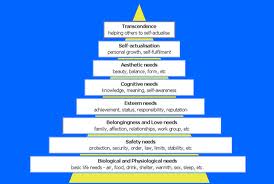
    Why do we work?   There are many reasons and some psychologists have used Abraham Maslow’s Hierarchy of Needs to explain why we work.  

    Hierarchy - Maslow
    Hierarchy – Maslow

    The basic needs, the physiological needs and safety needs, are at the bottom or the pyramid.  We work for food, safe housing, medical care, and security.  In the middle are our needs for belonging, love, self-identity, and self-esteem.  We may not expect to find love in the work force, but we would like respect in addition to feeling that our jobs match our self-identities and enhance our self- esteem.  The top level needs are for growth and not survival and might include beauty, justice, self-actualization, and knowledge.  According to Maslow we must have the lower level needs met before we can move upward to the higher needs.

     During the Agricultural Age and Industrial Age, most people worked to fulfill their basic needs.  Work was to pay the bills not to give you identity or self-esteem.  With the Information or Postindustrial era, the concept of work changed and we expected our jobs and careers to meet our higher level needs for belonging, self-esteem, and self-identity and maybe knowledge and self-actualization.  Only those who lacked an education worked for the basic needs.

     The Recession that began in 2008 changed things again.  People who once had positions that met their middle and upper level needs now find themselves unhappily working to secure the basics.  But the genie will not go back into the bottle.  Most of us want our work to be more than supplying our basic needs.  There were and are an abundance of books on how to get ahead in the workplace and if that  was not working out, there are the books that tell us how to escape from corporate America and start making money by being who you really are.  In other words, create a business based on something you feel passionate about.

    I teach Self-Assessment and Career Planning as a college course and write resumes.  My students and clients primarily want their careers to meet all their needs and provide them with financial security.  Oops the long-term financial security is no longer part of the social contract.  I also use the Life First – Work Second approach to career planning  that comes from Changing Course.com.  This coaching method asks what do you want your life to look like, before it asks what kind of work/business do you want to do.  It consists of one-three laser coaching sessions to help the client discover how to make money from their passion(s).

    Now I am finding passion to be a tricky component of starting a business.  Does your business have to be based on a passion?  Can it be based on a skill you have or based on a need in the community that you can meet without it being something you are passionate about?  What if your passion will not translate into a business of job – you’re passionate about baseball or opera – but you do not have the talent to work in these fields? (Of course, you might have the ability to write about them)  What about a passion to do anything that will make a lot of money and give you lots of leisure time?  (And there are plenty of websites that promise help you do this)

    Life first –work second.  What do you want your life to look like?  If your leisure time activities are really important to you, you certainly may want a business that provides plenty of leisure time.  If your life is your children  or grandchildren, then work should allow plenty of time with the kids.   Your business may be online, but it does not have to be. 

    Abel Gonzales Jr. works for24 consecutive days, 15 hours per day at the Texas State Fair, frying up a food that he “invented” – fried butter.  You can probably understand how inventing new tasty treats could be a passion, but 24 long days in the heat of Texas!  Abel makes enough in these 24 days for the rest of the year.  More than 11 months to do whatever else he wants .  (From Changing Course –Special Edition 9/15/13)   If creating new fried food sensations may be your passion, check out what has won prizes at the Texas State Fair.  http://www.bigtex.com/sft/Nav/foodinformation.asp

    All that leisure time would fulfill the needs of some of us and be a nightmare for others.   Assessing or knowing yourself is part of Life first.  If you are an Extrovert who gets your energy from being around people or  a person for whom work has always given structure to your life, having lots of leisure time will not fulfill your needs.  If you are a retiree who wants to start a business or are thinking of starting a business when your retire, there are many things you should consider and your need for structured time and time spent with other people are two of those considerations.

    What’s more important?  Money?  Passion?  Leisure?  Meeting some need?  Using your skills or talents?  Let the Halfpreneur know your opinion.

  • The Benefits of Self-Employment

    In addition to the extra money, there are other potential benefits to part-time and full-time self-employment.

    •  Meet interesting people.  Usually your business takes you out into the world or brings interesting people into your office that you never would have met any other way.
    •  Life-long learning.  Learning is valued when you work for yourself.  You get to decide what formal and informal learning is necessary for your success.
    •  Ongoing personal growth.  Your business will encourage you to keep growing and discovering new talents and wisdom.
    •  Talent management.   Self-discovery leads to finding your greatest assets and making the most of them.
    •  Keep your imagination.   You can continue to use your imagination and be rewarded for it.  Your creativity will not just be useful it may be absolutely essential.
    •  Better mental health.  The research clearly shows that problem solving is better for you than complaining about things.
    •  Longevity.  Ongoing research is showing that self discovery, using our skills and talents, solving problems, and staying active especially if combined with less stress and less fast food often leads to a longer, healthier, life.
    •  Learn personal responsibility.  If your parents or teachers did not teach you this essential lesson, a business will.
    •  Be a positive role model.  If you follow your dreams, you set an example to your children and others.  They make take inspiration from you without ever realizing it.
    •  Live your passion and purpose.  People want to be appreciated, useful, and know that their lives have meaning.  Discovering your passion is often a prelude to finding your purpose.   A life inspired by purpose means you have discovered what truly matters to you, makes you authentically happy, and allows you to serve others in great and small ways.
  • How Coworking Will Improve Your Career and Life

    Post Author: Gerard.

    I’m a writer and when I tell people I rent office space, I can tell they’re often thinking, “what a waste of money.” I mean, sure, I could work at home and save a little cash. We have an extra room with a door and everything. But, honestly, there are so many benefits to my coworking membership that I wouldn’t give it up any sooner than my iPhone.

    Here are just a few of the ways coworking can change your life and career:

    1. You’ll get twice as much work done at your new co-working desk than you did at home. Really and truly. It’s reverse peer pressure or something.

    2. That side project you’re trying to launch? Now you work side-by-side with a bunch of writers, designers, developers and video people who can help you make it happen.

    3. Your client needs a big website? But you can only handle part of the project? See number two. Now you can assemble a team to meet those needs in a flash. Or earn some brownie points with a referral.

    4. Avoid elderly shut-in syndrome. Seriously, there’s magic just to getting out of the house and talking with real people. Your cat has already heard ALL your best stories.

    5. Keep work from bleeding into every corner of your personal life. It’s easier to create a healthy work/life balance when “leaving it at the office” doesn’t refer to the spare bedroom.

    6. You’ll effortlessly keep up with all the latest Internet memes. Like this one. Or maybe this one. And I’ll go ahead and throw in a totally self-serving link.

    7. It solves annoying business problems. After whining about bookkeeping, my office mates introduced me to a wondrous thing known as Fresh Books.

    8. You’ll build and expand your professional network. Even when you’re too busy to make it to that Meetup/event/cocktail thing-y that you didn’t really want to go to anyway.

    9. Your grandma will start to think you have a real job. Maybe your mom, too. It’s something about going to an office that impresses the older relatives.

    10. Have you looked at your tax bill yet? Your co-working membership is one more awesome thing to decrease your taxable income.

    11. Creative energy is contagious. Being around other people working on awesome projects makes you more excited about your awesome projects.

    12. If you’re a parent with kids at home, I hear it’s delightful to work in an adults-only space. No crying or tantrums or impromptu Candyland games (well, most of the time).

    13. You’ll have people to bounce ideas off in real time. Not sure if that headline is too nutty? Or need advice on a client issue? Ask your desk neighbor.

    14. There’s almost always beer and wine in the fridge. And no one cares if you break it out at, say, 3:30 on a Friday afternoon.

    15. Wow, you now have two conference rooms at your disposal for client meetings. Or just to take a private phone call. Aren’t you fancy?

    16. When you do decide to go to a Meetup/event/cocktail thing-y to network, you won’t have to go far. We host a bunch of them right here in the space.

    17. Want to hold an event for you own industry or professional group? Your membership gives you 24/7 access to the space, and you can hold those events here for free.

    18. Umm, sunshine=happiness. And we work in an awesome light-filled loft in a historic building. We’re even convinced there might be a secrete passageway somewhere.

    19. You’ll sound (and be smarter) in all those client meetings. It’s easier to keep up with what’s going on in the business and tech worlds when you have office mates.

    20. You can still work at home when you feel like it. I do it a couple days a week. A coworking membership doesn’t cost all that much, so you don’t have to feel bad about not going every day.

    21. You’ll have real-life co-workers again, but no boss. Or weird corporate rules about what you can put on your desk. It’s the best of both worlds.

    22. We know all the awesome lunch spots. And want you to come with us. Just be prepared to hear about the latest Internet meme (see # 6).

    23. Co-workers are better than a personal cheerleading squad. They want your business—and your most offbeat side projects—to be smashing successes.

    Did you make it all the way to the end of this post? You should definitely set up a time to drop inand work with us. We’re even better in person.

    – Written by Michelle Taute, Cincinnati Coworks Member, @michelletaute


  • Coworking Spaces – Work Alone and Work with Other Like-Minded People

    One of the reasons I hear from people who are on the fence about starting their own business is that they need human contact and they would miss not having coworkers and friends at work if they were solopreneurs.

    Renting or subleasing space, as I suggested as a option last week for people unable to work from home, is not appealing to these  potential entrepreneurs who enjoy the camaraderie of the workplace even if they hate their jobs.  Since writing my blog last week, Location, Location, Location, I have discovered that I was unaware of one more option for working space – coworking spaces.  Apparently there are Office Rental facilities, Startup Incubators and Coworking spaces.

    Office rental  facilities exist to rent space at a profit.  The owners have taken one or several pieces of property, breaking it into smaller pieces and maybe adding some services.  Those who need a private office and do not want to rent or lease on office of their own find office rental useful.   Depending on size and location, they can be quite affordable for someone beginning a business.  There may be a sign up fee, or they may  require a time  commitment, or a criminal background check, but generally they do not have a formal application process.  The relationship is one of landlord-tenant.

    Startup incubators are places that stimulate high-growth, venture-backed startups.  They may be subsidized by government agencies or investment firms who hope to discover promising young companies to add to their portfolios.  In theory, they take people with ambition, good ideas, a prototype and some funding and provide guidance, education, resources, and connections to move them forward as a business.   There will be an application process to go through and criteria that must be met.  This would be an option only for a part-time entrepreneur who is now ready to go full time.

    Coworking spaces are organizations that offer membership to a community of like-minded people.  Their  goal is to facilitate a healthy community of independents.  The organization is not renting the property to make a profit but rather charging a price that will cover costs.  Most coworking spaces belong to a global movement that subscribes to five core values:  community, collaboration, openness, sustainability, and accessibility.  Some spaces are truly global and your membership allows you to use space in coworking spaces in other countries.

    Coworking space is ideal for people who want access to a place and community on their own terms and whose needs are a desk and internet connection.  Besides someone starting a new business, freelancers, contractors, telecommuters, and travelers may gravitate to these spaces.  Coworking spaces are communities and so they may have different cultures.  Some cater to geeks; some to writers, graphic artists and other creative folks.   Unfortunately, coworking spaces are generally available only in big cities (at least in the Eastern US).   Do you own property that is too large for your business idea, look into founding a coworking space.

    Office rental facilities and startup incubators service the needs of the business people who are seeking to make a profit.  Coworking spaces are more communities of practice, where people go to work on their craft – individuals  who work at something they care about and who perceive their business as a means to an end.  The work, the practice, the craft is more important than the profit.

    For the individual who wants to earn money pursuing their passion on a part-time basis with like-minded individuals with whom they will not be competing, joining or founding a coworking space would be a great opportunity.

    The advantages of coworking , will be my next post.

  • Why Having Multiple Streams of Income May Be Your Next Career Path

    Howard Figler, nationally known speaker, writer and career counselor suggests that “today’s career success may carry five business cards and be serious about all of them….If one source of income is good, then five sources may be even better.”

    Working at more than one job was once known as “moonlighting;” more recently working simultaneously at several jobs became know as the portfolio career.  For most people, however, it is easier to understand the “moonlighter” working for needed extra money than to understand why someone might have several “jobs” to which they are committed.  Holding simultaneous multiple jobs is not the norm, and those who do, find that they are frequently accused of being unfocused, scattered, unable to set priorities, or maybe even suffering from undiagnosed ADHD.

    Barbara Sher in Refuse to Choose, put in a good word for some of these individuals and called them “scanners.”  A scanner has intense curiosity about numerous unrelated subjects.  Committing to just one career just is not possible unless it includes incredible variety.  More than 50 years ago, Donald Super, a pioneer in the field of the psychology of career development stated that we are all multi-potential and one job or career may not satisfy us.

    In this challenging new economy, having several simultaneous sources of income may be the way to achieve career success.  Now that periods of unemployment are becoming common for many workers, your career success might come from having several career identities.

    This may mean that you must learn to think like an entrepreneur.  It is quite possible to keep your day job and start a home business on the side.  Your entrepreneurial pursuits might be part time or seasonal.  With the internet, micro-entrepreneurs can start very small businesses with virtually no monetary risk.

    What does a Portfolio Career or 5+ Business Card Career look like? With this career style you  may have:

    1. full time job or two or three employers with whom you have contracted.
    2. a business that supplements your regular income.
    3. one or more businesses that you are cultivating to see if they are right for you.
    4. a source of income you are building for “retirement.”
    5. a part time business you use when you are between jobs.

    Your career identities may come from your “five-plus” businesses that are all related to one theme or industry or your identities may spring from monetizing your passions, interests, or natural talents.  Having a 5+ Business Card Career can provide:

    •  increased income variety that can replace income lost by unemployment or retirement.
    •  a way of taking advantage of all your interests.
    • a better position to take advantage of changes in the market place.

    Interested in monetizing your passions, interests, natural talents click on Services, or visit www.career-development-services.com, or call 508-752-2600

    This article was originally printed in ezine   May 2010


  • Labor Day, 2013 – Is Our Labor Still Valuable?

    The first Labor Day holiday was celebrated in New York City in 1882, by 1885 the holiday was being celebrated in a number of industrial centers, and in 1894 Congress made it a national holiday.  There is some doubt as to who proposed this holiday for workers.  Some claim that Peter J. McGuire, general secretary of the Brotherhood of Carpenters and Joiners and cofounder of the American Federation of Labor proposed the holiday while others believe the founder was Peter McGuire a machinist and secretary of the Central Labor Union in New York. Peter McGuire’s proposal did include appointing a committee to plan a demonstration and picnic.

    Labor Day
    Labor Day

    In the early years of this holiday, street parades were common in cities and towns to show the strength of their community’s trade and labor organizations. Well the parades are a thing of the past and American workers participation in labor unions peaked in the 1950s and has gone into decline.  What are we celebrating in 2013?  According to the United States Department of Labor, Secretary Thomas E. Perez, Labor Day is a ”yearly, national tribute to the contribution workers have made to the strength, prosperity, and well being of our country.”  Besides the doubt as to who proposed this holiday, perhaps there is now another doubt about Labor Day.  Is American labor valued?    Interestingly the statement from the Secretary of Labor is in the past tense.  Is labor still valued?  Are American workers somehow at risk?

    Unemployed
    Unemployed

    According to the Catholic News Service, “The economy is not creating an adequate number of jobs that allow workers to provide for themselves and their families. More than 4 million people have been jobless for over six months, and that does not include the millions more who have simply lost hope. For every available job, there are often five unemployed and underemployed people actively vying for it. This jobs gap pushes wages down. Half of the jobs in this country pay less than $27,000 per year. More than 46 million people live in poverty, including 16 million children.”    tinyurl.com/oxs9rqm#laborday


    Just a remnant of the Great Recession?  Probably not.  Time Magazine reports in its 9/9/13 edition that “According to a study published by the Reserve Bank of Chicago, by the end of last year U.S. manufacturing had recovered 75% of the output lost in the Great Recession but only about 21% of the lost jobs.”  How is this possible?   The use of new technologies brings greater efficiency and computer technology and robotics is likely to further reduce the need for labor.  According to Erik Brynjolfsson and  Andrew McAfee,  authors of Race Against the Machine, “The root of our problems is not that we’re in a Great Recession or a Great Stagnation, but rather we are in the early throes of a Great Restructuring.”   This restructuring is that computer hardware, software, and networks are going to get more powerful and capable in the future and have an even bigger impact on skills, jobs, and the economy.

    WARNING:  If  your job involves learning a set of logical rules or a statistical model that you apply task after task you are ripe for replacement by a robot.  This includes not only jobs like issuing boarding passes and grilling hamburgers but jobs like completing tax returns.  Professional jobs will not be safe either.   Medicine, nursing, sales, teaching, stock trading all have aspects that can be automated.

    artist
    artist

    HELPFUL SUGGESTION:  Learn the skills to migrate to occupations that are genuinely nonroutine and thus protected from automation.  Successful, productive work will be based on mastering creative, analytical, or intuitive skills.  Hair styling, plumbing, designing buildings, and plotting corporate strategy are all going to be difficult to automate.  And low paying work will still be available in jobs that are currently low paying and not worth automating:  cleaning hotel rooms, cutting shrubs.  Jobs that require working with new information and solving unstructured problems will also remain.

    If this is the direction of the Great Restructuring, more unemployment looks inevitable, but we are in the early stages of this restructuring and we don’t know how it will evolve or what role we can play in its evolution.

    OTHER PERCEPTIONS:  Many of the endeavors that part-time entrepreneurs take on are those that can’t easily be automated or that we would not want automated.  A robot tour leader?  A robot fitness or yoga instructor!!!!  A robot wedding planner that does the wedding photography as well?????  What are your creative, intuitive, or analytical skills? Build your part-time business around these skills.

    yoga instructor Yes, we keep hearing and reading that “The economy is not expanding” and  “No one is hiring or creating jobs”  Being a halfpreneur does not mean that you have to work alone.  Mahatma Gandhi once said, “Be the change that you hope to see in the world.”  You can be the one that hires the fitness trainers or yoga instructors for your studio.  You can plan and organize the garden tours or restaurant tasting tours, or the ghost tours but you can hire others to actually run the tours.  It is possible for you to be a job creator.

    In this “Restructuring” not only computers will become more powerful but also networks.  We should maintain our interpersonal skills for in-person and online communication.  I suspect a personal touch and knowing one’s customers by name and preferences may become even more valuable for a small business person.  News already travels almost instantaneously, maintain high standards of customer service and honesty.

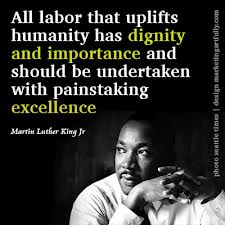
    Martin Luther King Jr
    Martin Luther King Jr

    If this “Restructuring”  is going to continue to accelerate the gap between the rich and the poor, we need to consider the consequences of not valuing labor.  “Work and love are the two essential ingredients of a well-adjusted personality.”  (Sigmund Freud)  We are currently seeing the stressful lives lived by the long-term unemployed.  But with some creativity and concern it seems like we can use robots or automated devices to do dangerous jobs and still provide work that people will find meaningful or at least capable of providing support to themselves and their families.   Maybe we need a society that will actively encourage more people to become entrepreneurs. Those who own homes, those who own their own businesses are more likely to be committed to their communities.

    Those at the top of business and industry need to figure out that they cannot pay their workers like paupers and have them spend like princes”.  (paraphrased from John C. Médaille, Toward a Truly Free Market),   OK, we tried having it both ways for a while – an economy based on credit cards and unaffordable mortgages did not work out well for most of us.

    Celebrating labor, supporting labor is not being against capitalism. “Labor without capitalism is unemployment; capitalism without labor is sterile.”  (John C. Médaille ­)


  • Designing Your Web Site

    If you are in business, even in a small part-time business, you need a website.

    There are three pages that your website must have: The Home Page/Welcome Page, About Me/Contact Page, Products and Services Page.

    The Home Page – The purpose of this page is to let your customer know that they have come to the right place and you can help them.  On this page you will want to include:

    –           Who you help
    –          The problem(s) you solve
    –          The benefits you provide
    –          Why they should choose you!

    The About Me /Contact Page – Some key points to mention on this page are:

    –          Your relevant experience
    –          Passion for your topic
    –          What you have achieved in your own life or have helped clients achieve
    –          Anything else that adds to your credibility
    –          One or two testimonials
    –          Your email and/or phone number

    Services and Products Page – This page should display the goods and services you offer. Tell them the process you use so they will know what to expect if they work with you.  One or two short paragraphs on each product or service is sufficient.  Your aim is to get them to contact you.  Supply phone number and email address again.

    Some basic rules for a professional looking website:

    -Keep your site basic, clean, and uncluttered.

    -Start off with a strong headline that offers a benefit (sorry but “ welcome  to my site!” is NOT a good headline.)

    -Stress benefits of your product or service not features.

    -Include an address and working phone number.  This builds trust with your customers.

    -Make it easy to use your site.  Use consistent, clearly labeled navigation links

    -Don’t make customers work to find your links.  They should be in blue text and underlined.

    -The text should be easy to read.  Black text and white background.

    -Keep fonts and sizes consistent.  A large blue headline followed by a red paragraph, followed by black text with randomly placed blue words causes eyestrain. Your potential customers will leave before they even know what you offer.

    -Keep the design consistent throughout the entire site.  Your graphic elements are part of your brand.  If your graphics are jumbled and confusing, your potential customers may assume that you products are poorly conceived and not worth purchasing.

    -Don’t use a flash intro.  Just take them to your home page.

    -Keep graphics small. The larger they are, the longer it takes to download your page.  Do use some graphics; people like breaks in the text.

    -If you decide to include advertising on your site, limit the number of flashing banners or animated graphics.  They annoy customers and detract from your message.

    -Have a method to get each visitor’s email address, which you will use to follow up later.  This is the foundation for an online business  Two or the most common ways to capture email addresses and send out freebies and newsletters are :     www.aweber.com    and      www.constantcontact.com

    Do you need to hire a designer to create your website or  should you do It yourself with a template?  Many hosting companies offer easy to use templates.  WordPress and Weebly Drag and Drop can be readily mastered by someone with basic word processing skills.  Both offer ways to customize your site and make it feel more like you.  If you have a tendency to write and think at the same time and get new ideas while you are in the act of writing, you may want to create your own site.  An experienced web designer will be able to get your website up more quickly and be able to create an unique site.  Ideally though you should learn how to update and maintain your site.  If you are looking for a reasonably priced free lance web designed try Craig’s List, elance.com and fiverr.com.

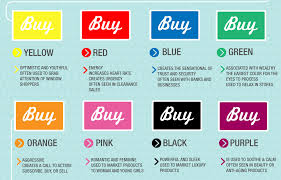
    Either you or your designer has to come up with the color scheme for your site.  Do colors matter?

    Why are financial reports often colored green?  Why do fast food restaurants use bright orange and yellow?  Colors express various feelings and influence our emotions.  Not all experts agree about the exact feelings and emotions that each color triggers, but there is some minimum agreement that each color can evoke positive or negative emotions.

    Buy Now
    Buy Now

    Red —strength or aggression
    Orange — warmth or frustration
    Yellow — optimism or anxiety
    Green — peace or boredom
    Blue — calm or coldness
    Purple — quality or decadence


  • 10 Success Tips

    Most people want to be successful in life and if you are starting a business, you obviously want to be successful in this venture as well.  In life or in business, success can mean different things to different people, but all success shares one component – it takes work to reach.

    There are many ways to achieve success, so here are tens tips that you can apply.

    1. Dare to Dream but Keep in Mind Your Actual Potential

    To succeed, you need to have dreams and aspirations. Be honest with yourself as to what you want out of life and what you want to give of your life. Allow your mind to dream and think big.  In order to succeed, however, you need to have the potential to reach your goals. For example, if you want to be a recording artist but have no singing ability, having success in this field is not likely, however you could still work in this field by promoting recording artists. However, if you love working on cars and have a real talent for fixing engines and transmissions, you have the potential to learn more and achieve success in the automobile industry.

    2.  Focus on Something you Like

    To increase your chance of succeeding, you should concentrate your efforts on something you enjoy. When you start out, make a list of everything you find interesting. Then in a second column, write down the skills you have in relation to each of those items. This will help you narrow choices down based on interest and skill, which gets you started in the right direction for success.

    3. Have a Plan / Create a Business Plan

    Even if it is flimsy to begin with, you should construct a plan to include goal, milestones, deliverables such as contracts, business plans, etc., and accomplishments. This will provide you with a visual as to what you are working for, what milestones you have successfully met, and where you need to do better.

    Early in your new business, you may want to create a business plan. You can launch your business without it as long as you are not looking for investors.  The value of the business plan, even if you are the only one who reads it, is that it will be the blueprint to your success, because it will consist of market trends, financial planning, competitive analysis, exit strategies, marketing and promotional options, and everything else about your goal. The business plan will allow you to keep track of everything involving your goal.

    4. No Shortcuts

    An old cliché states, “Anything worth doing is worth doing well.” This should be your motto. When you want to succeed, you cannot afford to take shortcuts. Taking shortcuts leads to imperfection and inadequacies. Always strive for the best, even if it requires a little more time and effort.

    5. Don’t Look Back and Don’t Give Up

    Everyone has failures or mistakes from the past. To have success, you need to learn from your past and value those difficult lessons but do not every dwell on the past. Simply move forward and make better, more educated decisions from the lessons learned.  If you are starting a business, you will make mistakes.  Many successful entrepreneurs have failed at least once in earlier businesses. To reach success, you have to persevere. Even Thomas Edison had to learn this. When he was creating the incandescent light bulb, it took him more than 10,000 times to get it right. Keep striving even when it becomes challenging.

    6. Getting Past Fear of Failure

    Being afraid of failure is a normal emotion for every person on the planet. How you get past that fear is the determining factor between failing and succeeding. You can do that by setting realistic goals and then examining those goals on occasion to do any necessary realignment. Above all, believe in yourself and the desire burning within.

    7.   Accept Responsibility

    You need to accept responsibility if you make a bad decision or fall behind in your plan. Let us say that you have set some firm milestones that need to be accomplished in order for you to move to the next step. However, you got tired of working hard and took some time to play, which is fine as long as it does not affect your goals. Now months have passed and you are way behind schedule. This delay has closed several doors of opportunities. Who is to blame?

    8.  Have Courage; Don’t Just Settle

    Depending on what your specific success is, it may take courage to arrive at your desired destination. For example, if you have a dream of being a writer and to you, that  , is success, but according to your long line of family members who have all gone on to be doctors, the only success in their minds is if you follow down the medical path. This means you will have to have courage to stand up for what you believe and desire to do, even if it means disappointing family.

    If you have a goal of becoming a world-famous chef with your own restaurant and you know you have both desire and skill, do not just settle to become a short order cook at your local family-style restaurant. While that may be good training ground, do not allow yourself to lose sight of your ultimate goal..

    9.  Customer Relations

    Keep your line of communication open with your customers. If they have a problem, show them the deserved respect and resolve the issue quickly. Make occasional phone calls or send emails to see if they have any needs. This will let your customers know that you are there for them and care about their business. This relationship is what is going to keep you on the road to success. After all, the customer is your link between failure and success.

     10. Make Opportunities

    Rather than wait for opportunity to find you, you need to find opportunities. This might be watching for business opportunities in the paper regarding small businesses being sold, great real estate opportunities, and investments with stocks, bonds, or mutual funds, taking a talent and turning it into an entrepreneurial adventure. People that have achieved financial success will tell you that they look for ways to seize opportunities, not wait for opportunities to come knocking on their door because it will not happen that way. You must make opportunities or be ready to seize them when they become available.