So what if you want to start a part-time business but you don’t really want to do the work of actually starting a business. Maybe you want a business, but you are not sure you have what it takes. You think that you would enjoy selling something that you believed in, but what if you did not?
Consider joining the 15.6 million Americans who have turned to direct selling for part-time income or even as a full-time career. Why is direct selling so popular? Besides providing you with a product and training, surveys indicate that most consultants choose direct selling because it’s uniquely flexible. You can:
be your own boss
set your own hours
work around other priorities such as providing care for children or aging family members
begin with a very limited investment and it is one of the few work ventures where women earn dollar for dollar what men earn
drop out easily, if you discover that it is not for you.
Since direct selling is easy to enter and leave, it is an excellent choice for the halfpreneur that is exploring their options or the reluctant halfpreneurs – those who feel a need to start a business not because they really want to be in business but they need extra cash and/or there is some obstacle to finding another job. For instance, you only want to be in business:
to bring in some extra money to afford a vacation or to pay down some debt
because it is a flexible way of providing income while you care for family members
while you are unemployed, so there will be no gaps on your resume
for something fun to do while you ease into retirement
to meet new and interesting people
If you’re interested in finding a direct selling organization to be a part of, the best places to start are the Direct Selling Association’s website and DirectSelling411.com. http://www.directselling411.com/forms/CompanyFormPublicMembers/ provides information on the companies that sell specific products and services. Direct selling is no longer just cosmetics and vitamins. There are real estate services, educational services, home appliances, telecommunication, craft supplies, and wine – to name a few. But it is important to like the products you’re selling, and find a company that can give you a solid support system for a fast, smooth start.
Are you a Reluctant Halfpreneur? You’ve never wanted to start your own business. You like working for someone else. There are benefits, a stable paycheck, and people who you enjoy working with. Start your own business! No way!
Then …… Management changed and your position changed too, and not for the better. Perhaps you are a parent and you have lost the flexibility to come in early so you can leave early for your children’s sporting events. Or, the handwriting is on the wall – your job or your whole company is at risk and local opportunities for someone with your skill set are nil. Or you thought that your career was secure for the next 5, 10, 15 years, but now you are over 55 and out of work. The odds of finding another comparable position in your field are slim. Not impossible, but all the government and business statistics warn that it will take you much longer to find a job than it will for a 40 year old. Part-time at fast food service or retail sales is not what you have in mind when your unemployment compensation runs out.
If your experience does not immediately translate into something you can start your own business in and it is important to you that you work at something professional, with a potential for good pay, and offers the opportunity to interact with interesting people, where do you look for ideas. There are some career and life coaches that specialize in working with individuals in the position that you find yourself and be able to help you find your passion. Before going the coaching route, here are two more reasonably priced options.
Look over the catalogs for your local colleges, especially community colleges. Take a look at what is being offered in certificate programs and in their noncredit programs. These offerings will indicate what may be in demand in your community. You may want to earn a certificate or take a course or maybe you have the background to make the transition into this new field. Employment or self-employment in this new field may be possible.
Visit http://www.entrepreneurbookstore.com. They sell two types of books: kits to help you start your own business that generally cost $69 and start-up books that retail around $18 – $22. The kits have business forms and worksheets and walk you through the entire planning process. The start-up books have plenty of information about the business and how to start it, but not the forms. If you are exploring your possibilities, the books are helpful. I purchased one recently thinking that it represented an area I could expand my current business into. Well, I could go that route, but I discovered that there were many aspects of this new business venture that would not be a good fit with my current life style. I got some ideas I might use so it was $19.99 well spent.
Since Entrepreneur Press is the publisher (my only affiliation with Entrepreneur magazine is that I subscribe to it) many of the kits and start-up books are appropriate for those with a professional or administrative background. Title include: Public Relations, Event Planning, Consulting, Freight Brokerage, Tutoring and Test Preparation, Executive Recruiting, Staffing, Online education, Import- Export, Home Inspection, College Planning Consultant.
Event Planning
If more than one idea interests you, research it further – interview someone who does this type of work; research your local market; talk to the former executives who staff your local SCORE office or visit or agencies (at colleges, Chamber of Commerce, Small Business Bureau) that assist those starting new businesses. Can’t narrow down your choices – a career coach or Profiting from Your Passions coach can help. Need guidance in setting up a business – consider a new business coach.
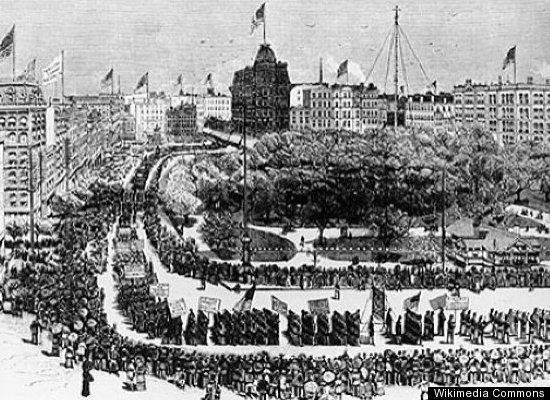
The first Labor Day holiday was celebrated in New York City in 1882, by 1885 the holiday was being celebrated in a number of industrial centers, and in 1894 Congress made it a national holiday. There is some doubt as to who proposed this holiday for workers. Some claim that Peter J. McGuire, general secretary of the Brotherhood of Carpenters and Joiners and cofounder of the American Federation of Labor proposed the holiday while others believe the founder was Peter McGuire a machinist and secretary of the Central Labor Union in New York. Peter McGuire’s proposal did include appointing a committee to plan a demonstration and picnic.
Labor Day
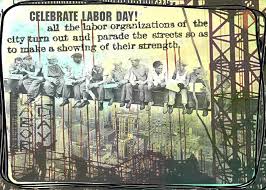
In the early years of this holiday, street parades were common in cities and towns to show the strength of their community’s trade and labor organizations. Well the parades are a thing of the past and American workers participation in labor unions peaked in the 1950s and has gone into decline. What are we celebrating in 2013? According to the United States Department of Labor, Secretary Thomas E. Perez, Labor Day is a ”yearly, national tribute to the contribution workers have made to the strength, prosperity, and well being of our country.” Besides the doubt as to who proposed this holiday, perhaps there is now another doubt about Labor Day. Is American labor valued? Interestingly the statement from the Secretary of Labor is in the past tense. Is labor still valued? Are American workers somehow at risk?
Unemployed
According to the Catholic News Service, “The economy is not creating an adequate number of jobs that allow workers to provide for themselves and their families. More than 4 million people have been jobless for over six months, and that does not include the millions more who have simply lost hope. For every available job, there are often five unemployed and underemployed people actively vying for it. This jobs gap pushes wages down. Half of the jobs in this country pay less than $27,000 per year. More than 46 million people live in poverty, including 16 million children.”tinyurl.com/oxs9rqm#laborday
Just a remnant of the Great Recession? Probably not. Time Magazine reports in its 9/9/13 edition that “According to a study published by the Reserve Bank of Chicago, by the end of last year U.S. manufacturing had recovered 75% of the output lost in the Great Recession but only about 21% of the lost jobs.” How is this possible? The use of new technologies brings greater efficiency and computer technology and robotics is likely to further reduce the need for labor. According to Erik Brynjolfsson and Andrew McAfee, authors of Race Against the Machine, “The root of our problems is not that we’re in aGreat Recession or a Great Stagnation, but rather we are in the early throes of a Great Restructuring.” This restructuring is that computer hardware, software, and networks are going to get more powerful and capable in the future and have an even bigger impact on skills, jobs, and the economy.
WARNING: If your job involves learning a set of logical rules or a statistical model that you apply task after task you are ripe for replacement by a robot. This includes not only jobs like issuing boarding passes and grilling hamburgers but jobs like completing tax returns. Professional jobs will not be safe either. Medicine, nursing, sales, teaching, stock trading all have aspects that can be automated.
artist
HELPFUL SUGGESTION: Learn the skills to migrate to occupations that are genuinely nonroutine and thus protected from automation. Successful, productive work will be based on mastering creative, analytical, or intuitive skills. Hair styling, plumbing, designing buildings, and plotting corporate strategy are all going to be difficult to automate. And low paying work will still be available in jobs that are currently low paying and not worth automating: cleaning hotel rooms, cutting shrubs. Jobs that require working with new information and solving unstructured problems will also remain.
If this is the direction of the Great Restructuring, more unemployment looks inevitable, but we are in the early stages of this restructuring and we don’t know how it will evolve or what role we can play in its evolution.
OTHER PERCEPTIONS: Many of the endeavors that part-time entrepreneurs take on are those that can’t easily be automated or that we would not want automated. A robot tour leader? A robot fitness or yoga instructor!!!! A robot wedding planner that does the wedding photography as well????? What are your creative, intuitive, or analytical skills? Build your part-time business around these skills.
Yes, we keep hearing and reading that “The economy is not expanding” and “No one is hiring or creating jobs” Being a halfpreneur does not mean that you have to work alone. Mahatma Gandhi once said, “Be the change that you hope to see in the world.” You can be the one that hires the fitness trainers or yoga instructors for your studio. You can plan and organize the garden tours or restaurant tasting tours, or the ghost tours but you can hire others to actually run the tours. It is possible for you to be a job creator.
In this “Restructuring” not only computers will become more powerful but also networks. We should maintain our interpersonal skills for in-person and online communication. I suspect a personal touch and knowing one’s customers by name and preferences may become even more valuable for a small business person. News already travels almost instantaneously, maintain high standards of customer service and honesty.
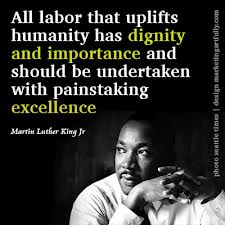
Martin Luther King Jr
If this “Restructuring” is going to continue to accelerate the gap between the rich and the poor, we need to consider the consequences of not valuing labor. “Work and love are the two essential ingredients of a well-adjusted personality.” (Sigmund Freud) We are currently seeing the stressful lives lived by the long-term unemployed. But with some creativity and concern it seems like we can use robots or automated devices to do dangerous jobs and still provide work that people will find meaningful or at least capable of providing support to themselves and their families. Maybe we need a society that will actively encourage more people to become entrepreneurs. Those who own homes, those who own their own businesses are more likely to be committed to their communities.
Those at the top of business and industry need to figure out that they cannot pay their workers like paupers and have them spend like princes”. (paraphrased from John C. Médaille, Toward a Truly FreeMarket), OK, we tried having it both ways for a while – an economy based on credit cards and unaffordable mortgages did not work out well for most of us.
Celebrating labor, supporting labor is not being against capitalism. “Labor without capitalism is unemployment; capitalism without labor is sterile.” (John C. Médaille )