Tag: Passion

  • 10 Steps for Turning Your Passions, Skills, or Interests into a Business

    The books and the workshops are out there. Monetize your passion…. Do What You Love and the Money Will Follow ….  Start Your Business Now ….. Making a Living Without a Job….. So how do you actually do this?

    Step 1: Brainstorm.  Take a moment, or hours, or even days  to write all your ideas down. Do not think about what will work and what might not work.. This is your brain storming session and you are allowed to write down whatever comes to mind.  Turn your censor off.

    Step 2. Make a List. Take the list of ideas from your brain storming session and write each idea on a separate piece of paper or index card. Use as many cards as you need.  Each idea should have its own card.

    Step 3: Categorize.  Look at each of your ideas, and sort them out, put them in categories.  Are any of them similar?  Do some of them go naturally together so they all might be done within one business?  For example, you love to cook and you love to help people with dietary restraints find foods and recipes they can use.  These two ideas would go in the same pile. The cards that state your love of doing stained glass and decorating your home for the holidays will go into separate piles.

    (more…)
  • Passion, Purpose, and a Happy Life

    Does your work – full-time or part-time need to help you fulfill your purpose in life.  If you can combine your skills, talents, and passion to fulfill needs, you probably have work that is ideal for you, but is this necessary to be happy?  Must you combine all four in your part-time business?   I have been trained in Profiting from Your Passions coaching ® and although passion is in the title, individuals may choose their business niche for a reason other than passion.

    Chris Attwood and Janet Bray Attwood are the creators of the Passion Test, so obviously passion is most important.  Their recent post provides plenty of good information …….

    How to Be Happy in Life- The Most Important Decision You’ll Ever Make

    BY CHRIS ATTWOOD

    “Whenever you’re faced with a choice, a decision or an opportunity,choose in favor of your passions.”     – from The Passion Test

    Janet and I often say the sentence above is the most important part of The Passion Test Process. We ask our Passion Test facilitators to memorize it and use it in their workshops. We repeat it over and over and over again.

    Why?

    Because your passions are the pipelines to your soul. They connect you with your soul’s purpose in life. They are the light guiding you to fulfill your unique and special reason for being alive. As we say in The Passion Test:

    “What you love and God’s will for you are one and the same.”

    It’s not an accident you love the things you love. It’s not an accident you care about the things you care about. Nor is it an accident that when you are disconnected from those things you start feeling miserable and have to drag yourself through your day.

    These are all ways that life gives you feedback, telling you whether you are on the path of your purpose or off. If you listen, you’re passions will always tell you how to be happy in life.

    Finding Your Passion and Using Your Talents

    In the world of business, people talk about “beating out the competition,” but you have an unfair advantage. When you’re aligned with your passions, there is no competition. No one can fulfill you unique role in the world except you.

    The only time you have to worry about “the competition” is when you’re trying to be something or someone other than yourself. When you make decisions based first on money, rather than the things you love and care about most, then there is a real chance you’ll find “the competition” is beating you and you’ll begin to suffer.

    Passion + Skill + Talent + Need = A Purpose in Life

    In the same way that your passions emerge in you from somewhere inside, you are born with certain innate talents. There are things that come easily for you and are difficult for others. Just as it’s not an accident you love the things you love, it’s not an accident you are good at the things you are good at.

    As you get older, you’ll discover that your talents intertwine with your skills–the things you’ve learned to do well through education, training or experience. Now, here’s an interesting point:

    You can make a great living with just your skills and talents–but you will never be fulfilled until these two are aligned with your passions as well.

    We all Share a Common Purpose

    While you have a unique and special purpose in life, there is a common purpose we all share. It’s to serve each other.

    When you discover the reality that “there are no accidents in creation,” you’ll begin to see that the intersection of your skills, your talents, and your passions is where the unique way you can serve others is located.

    Here’s an interesting fact:

    The greater the need of others you’re uniquely able to serve, the more impact you can have and interestingly, the more money you will earn or raise. If you’re Mother Teresa, you may not create great wealth for yourself, but you will still attract millions and millions of dollars (or Euros, yen, etc.).

    And it’s useful to be aware that if you have a great desire to be wealthy, there’s a reason for that. It’s part of the unique role in which you are able to serve. If you don’t have that desire, there’s a reason for that as well. You don’t need to be wealthy to fulfill your special role.

    Every part of your life is designed to guide you to play the role you were born to play in the world.

    You just have to listen and know that we all share a common purpose in life.

    Discover How to be Happy in Life

    It begins by finding your passion. The most important decision you can make in your life.

    That’s the purpose of The Passion Test process.

    We created a modified version of the first step in The Passion Test process that was published in the September, 2013 issue of Success Magazine. They’ve kindly allowed us to make it available to you. Just click the link below to download the article and take The Passion Test again, in a new and fun way.

    The Passion Test for Success

    Thank you for reading this article on how to be happy in life and finding your passion and purpose in life.

    Topics included in this article are:

    Common Purpose

    Purpose in Life

    How to be Happy in Life

    Finding Your Passion


    Copyright © 2003-2012, Chris Attwood and Janet Bray Attwood

    Material on this web site may not be copied or published in other venues without
    showing this copyright notice and including a link to http://www.thepassiontest.com

    -See more at: http://thepassiontest.com/how-to-be-happy-in-life-the-most-important-decision-youll-ever-make-common-purpose-finding-your-passion-purpose-in-life/?inf_contact_key=91e0a611812ade6c6962dfa06704e478fd2004e7a586abed073c0788966ec701#sthash.R4YgrhI8.dpuf

  • Why Do We Work? Why Do We Start Businesses?

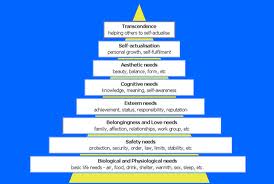
    Why do we work?   There are many reasons and some psychologists have used Abraham Maslow’s Hierarchy of Needs to explain why we work.  

    Hierarchy - Maslow
    Hierarchy – Maslow

    The basic needs, the physiological needs and safety needs, are at the bottom or the pyramid.  We work for food, safe housing, medical care, and security.  In the middle are our needs for belonging, love, self-identity, and self-esteem.  We may not expect to find love in the work force, but we would like respect in addition to feeling that our jobs match our self-identities and enhance our self- esteem.  The top level needs are for growth and not survival and might include beauty, justice, self-actualization, and knowledge.  According to Maslow we must have the lower level needs met before we can move upward to the higher needs.

     During the Agricultural Age and Industrial Age, most people worked to fulfill their basic needs.  Work was to pay the bills not to give you identity or self-esteem.  With the Information or Postindustrial era, the concept of work changed and we expected our jobs and careers to meet our higher level needs for belonging, self-esteem, and self-identity and maybe knowledge and self-actualization.  Only those who lacked an education worked for the basic needs.

     The Recession that began in 2008 changed things again.  People who once had positions that met their middle and upper level needs now find themselves unhappily working to secure the basics.  But the genie will not go back into the bottle.  Most of us want our work to be more than supplying our basic needs.  There were and are an abundance of books on how to get ahead in the workplace and if that  was not working out, there are the books that tell us how to escape from corporate America and start making money by being who you really are.  In other words, create a business based on something you feel passionate about.

    I teach Self-Assessment and Career Planning as a college course and write resumes.  My students and clients primarily want their careers to meet all their needs and provide them with financial security.  Oops the long-term financial security is no longer part of the social contract.  I also use the Life First – Work Second approach to career planning  that comes from Changing Course.com.  This coaching method asks what do you want your life to look like, before it asks what kind of work/business do you want to do.  It consists of one-three laser coaching sessions to help the client discover how to make money from their passion(s).

    Now I am finding passion to be a tricky component of starting a business.  Does your business have to be based on a passion?  Can it be based on a skill you have or based on a need in the community that you can meet without it being something you are passionate about?  What if your passion will not translate into a business of job – you’re passionate about baseball or opera – but you do not have the talent to work in these fields? (Of course, you might have the ability to write about them)  What about a passion to do anything that will make a lot of money and give you lots of leisure time?  (And there are plenty of websites that promise help you do this)

    Life first –work second.  What do you want your life to look like?  If your leisure time activities are really important to you, you certainly may want a business that provides plenty of leisure time.  If your life is your children  or grandchildren, then work should allow plenty of time with the kids.   Your business may be online, but it does not have to be. 

    Abel Gonzales Jr. works for24 consecutive days, 15 hours per day at the Texas State Fair, frying up a food that he “invented” – fried butter.  You can probably understand how inventing new tasty treats could be a passion, but 24 long days in the heat of Texas!  Abel makes enough in these 24 days for the rest of the year.  More than 11 months to do whatever else he wants .  (From Changing Course –Special Edition 9/15/13)   If creating new fried food sensations may be your passion, check out what has won prizes at the Texas State Fair.  http://www.bigtex.com/sft/Nav/foodinformation.asp

    All that leisure time would fulfill the needs of some of us and be a nightmare for others.   Assessing or knowing yourself is part of Life first.  If you are an Extrovert who gets your energy from being around people or  a person for whom work has always given structure to your life, having lots of leisure time will not fulfill your needs.  If you are a retiree who wants to start a business or are thinking of starting a business when your retire, there are many things you should consider and your need for structured time and time spent with other people are two of those considerations.

    What’s more important?  Money?  Passion?  Leisure?  Meeting some need?  Using your skills or talents?  Let the Halfpreneur know your opinion.

  • The Benefits of Self-Employment

    In addition to the extra money, there are other potential benefits to part-time and full-time self-employment.

    •  Meet interesting people.  Usually your business takes you out into the world or brings interesting people into your office that you never would have met any other way.
    •  Life-long learning.  Learning is valued when you work for yourself.  You get to decide what formal and informal learning is necessary for your success.
    •  Ongoing personal growth.  Your business will encourage you to keep growing and discovering new talents and wisdom.
    •  Talent management.   Self-discovery leads to finding your greatest assets and making the most of them.
    •  Keep your imagination.   You can continue to use your imagination and be rewarded for it.  Your creativity will not just be useful it may be absolutely essential.
    •  Better mental health.  The research clearly shows that problem solving is better for you than complaining about things.
    •  Longevity.  Ongoing research is showing that self discovery, using our skills and talents, solving problems, and staying active especially if combined with less stress and less fast food often leads to a longer, healthier, life.
    •  Learn personal responsibility.  If your parents or teachers did not teach you this essential lesson, a business will.
    •  Be a positive role model.  If you follow your dreams, you set an example to your children and others.  They make take inspiration from you without ever realizing it.
    •  Live your passion and purpose.  People want to be appreciated, useful, and know that their lives have meaning.  Discovering your passion is often a prelude to finding your purpose.   A life inspired by purpose means you have discovered what truly matters to you, makes you authentically happy, and allows you to serve others in great and small ways.
  • Passion, Purpose, Problems, People – Starting a Part-Time Business

    With the 2008 recession and it’s effects, self-employment, home-based businesses and an entrepreneurial spirit have emerging as an economic trend. This trend is not new, but it has accelerated in recent years with statistics now showing that 61% of all Americans want to start their own business (Parkinomics, 2010).

    If you are in this 61%, how do you make the transition from employee to being your own boss? Websites, books, e-books, and magazines may be helpful or they may leave you absolutely confused. Is it as simple as find your purpose and the money will follow? Do you really need to talk to your lawyer, your accountant, the volunteers at SCORE and then develop a business plan, decide on the legal form your business will take, and choose a domain name before getting started?

    It is NOT as simple as just find your passion and the money will follow, but with the Internet, businesses are easier to start than ever before. Of course, if you are buying a business or a franchise then your lawyer and accountant definitely should be involved!

    “Businesses are easier to start than ever before!” What if you want your own business but you don’t know what you want to do or where to begin? Get started by considering the FIVE Ps: Passion, Purpose, Problems, People, and Part-Time. For many individuals Passion and Purpose go together. Although they are different issues, the Problems you will solve and the People you will target are related. Your business is YOUR business, and it is your choice as to whether to pursue it on a full-time or part-time basis. If you are just starting out, there are good reasons to begin Part-time.

    Passion: Yes, you do need to discover your passions or passions. If you feel that you have no passions or that this word seems too strong, what about your interests, skills, abilities or talents? If you won a lottery that would pay you for life with just one stipulation that you had to “work” at something until you were at least 65, what would you do? Dream a little – If you had your own business what would you be doing? If you can’t envision what you would be doing, ask yourself – would I be working by myself or with others? Where would I be working – from my home? In an office? On a stage? Would I be writing, talking, painting, walking dogs, arranging flowers, designing solar homes? Start off dreaming and brainstorming. Don’t be concerned yet as to how this passion will make money. Figuring out how to monetize your passion is a later step.

    Purpose: Do your feel that you have a mission in life? A calling? A purpose? Some career coaches and counselors believe that having a purpose is essential, but it may be that a purpose is only discovered after one has had some life experiences. At this point, maybe you just want to make money, and there are plenty of young wealthy Internet marketers who know that they don’t want to work 40 hours per week. Knowing your purpose may make it easier to discover your passion. Purpose is related to the sense that your life is fulfilling and abundant, but a stool can stand very well on three legs or four legs. You can start a business without knowing your purpose or mission in life.

    Problems: Businesses exist because they solve problems. Fixing cars, computers, plumbing… providing food, toys, and electronics from other areas of the world… assisting people to heal from sickness, find jobs, train their dog… Successful business continue to exist because they solve problems better than others do. These businesses or individuals make promises and then they over deliver. The solutions they provide are bigger than the promise that they offer so customers repeatedly return. What problem or problems will you solve? What can you offer that no one else is offering? Try dreaming or brainstorming again or look around your community and to see if there are any problems that no one is trying to solve. Do you have the passion or expertise to solve it?

    People: Who, what niche or market, has the problems that you will solve? Do they have a common interest or need such as they need to lose weight or they’re technophobic? Are they members of a particular demographic group – working parents, baby boomers, etc. How will you market to this target group? An important aspect of monetizing a passion is to know who needs or wants what you have. This means your target may not be individuals; rather it maybe small or large businesses who need what you are offering.

    Part-time: If you still have a job, build your new career on the side. When it is established, you can jump into it full time, or sell it, or keep it part-time. It’s your business! Starting part-time allows you to figure out whether this business really is for you, test the market for demand, master any web based technologies that you need, attend trainings and conferences that will improve your knowledge base.

    Originally published by the author of this blog on June 14, 2010.  Article Source: http://EzineArticles.com/?expert=Mary_Ann_Nalbandian

    Profiting From Your Passions Coaching is available through http://www.career-development-services.com and this blog http://www.halfpreneur.com/services/