For most of our past history (1945 – 1995) “regular” employment, working for someone and getting a paycheck and benefits has been the norm for most American workers. Since the 1990s this “regular” employment has been slowly fading, to the chagrin of many whose first work value is security. Dan Lacey predicted the decline of steady employment in The Paycheck Disruption, 1990 and Cliff Hakim’s book We Are All Self-Employed, 2003, stated the need for Americans to reassess their place in the marketplace. William Bridges predicted both the fading of steady employment in JobShift, 1994, and that each individual was his or her own enterprise, Creating You and Co., 1998.
So whether or not you start a business, every working person today has to regard themselves as self-employed. Working for a salary is renting your skills; we are all temporary employees. Over the past 15-20 years, more and more individuals have started small businesses as either primary or secondary forms of income.
If you are thinking about starting your own business, you are not only in sync with a number of authors but also in sync with an old tradition and with some of the past leaders of our nation.
Colonial Stores
The more people who own little businesses of their own, the safer our country will be … for the people who have a stake in their country and their community are its best citizens. —– John Hancock
The prudent, penniless beginner in the world labors for wages for a while, saves a surplus with which to buy tools or land for himself, then labors on his own account for another while, and at length hires another new beginner to help him. This … is …the just, and generous, and prosperous system, which opens the way to all, gives hope to all. —— Abraham Lincoln —- “Annual Address before the Wisconsin Agricultural Society”
So what is a Halfpreneur? I coined the term when I was taking a coaching course (Profiting from Your Passions) that was designed to help individuals change course and start their own businesses. Most of my colleagues wanted to have full-time businesses and help others escape their cubicles and start their own businesses. The trouble was that I liked my full-time job and the part-time business that I had on the side. I liked having both and I knew many others who were part-time entrepreneurs and had “day jobs.” So a halfpreneur had one foot in employment (paychecks, benefits) and one foot in self-employment (additional income, better use of talents or skills, passion, mission ….) However, since creating this term, new definitions have kept emerging.
True to my background as an educator, I can’t resist putting my definitions into categories and giving examples.
Photographer
THE TRUE HALFPRENEURS – those who work year round or have a continual passive income
– New Biz Halfpreneurs – the most entrepreneurial of the halfprenuers – those who start new businesses and run them by themselves or with others. Personally I know an industry sales manager who is also a part-time real estate agent; a full-time health care professional and Reiki Master who teaches Reiki and performs Reiki treatments; and a full time social services worker who owns and manages a bar and employs the bartenders.
–Professional Halfpreneurs – those who have a licensed profession, work for an organization and have their own private practice. Among my friends and acquaintances there is an agency social worker with a private practice and a teacher who offers tutoring.
– “Artist” Halfpreneurs – this includes artists, photographers, musicians, authors, speakers, and performers who work in their art and have a “day” job.
–Craft Halfpreneurs– those with a craft who work on their craft/”hobby” year round and sell their crafts at craft fairs, in consignment shops and/or online. One of my colleagues gets free empty liquor bottles from bars and turns them into lamps. He has friends who recycle liquor bottle glass into ornaments and cheese trays.
–OnlineHalfpreneurs – those who do all their work online or by phone. Online halfpreneurs may be coaches, internet marketers, affiliate marketers, or do online auctions.
– MLM Halfpreneurs – Due diligence is required for this option, but some MLM organizations are much better than others. I know people who love and are doing very well in vitamin and jewelry MLMs.
Decorated House, picture image
SEASONAL HALFPRENEURS – those who work only at certain times of the year
Depending on the season:
Winter – Christmas house decorator. (Decorate property and take down decorations after Christmas)
Fall –Researching, organizing and leading October ghost tours.
Summer – I worked with a client who decided with his wife to offer bass fishing outings (food, equipment instruction) to couples looking for a new shared out-of-doors leisure time activity. Offering before and after daycare for summer camps is a godsend for parents whose work schedules don’t mesh with the 8:00am -3:00pm camp program.
Spring/Summer – Yard sale shopper – buy “stuff” cheap and resell at profit in consignment stores, on Craig’s List, or online,
Professor
CONTRACT HALFPRENEURS – those whose work is contractual
–Adjunct professors – usually teach one or two courses per semester and the commitment of the college and the professor is over at the end of the term.
–Online contractors – get work assignments for writing, graphic arts, web site development through fiverr.com, elance.com, or other sites.
Trailer
ASSET HALFPRENEURS – those with something to rent
–The Landlord – owns property and rents out apartments, rooms, or a summer home.
–The Mini-landlord – rents out an empty garage, extra storage space, space for yard sales, or a garden.
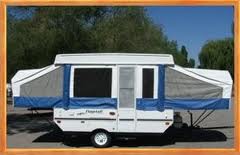
–The “Rental Agent” – briefly rents out his or her boat, camper, rototiller, cement mixer
Landscape
LOOK BEFORE YOU LEAP HALFPRENEURS – those who start a business while still employed as a trial run to see if their business is something that they really want to eventually pursue full time or to see if their entrepreneurial idea is even feasible.
Consultant
ENCORE HALFPRENEURS – individuals over 50 who start new businesses or are in the process of planning/starting a business as they continue working. The Encore Years have been roughly defined as 50 to 70+. Encore halfpreneurs have often thought earlier in life of starting businesses but as older, experienced adults, the timing now seems right. Many gravitate to consulting, public speaking, writing, coaching, although I know one woman who makes and sells jewelry. Younger encore halfpreneurs may return to school to get the training or credentials that might be needed for their future business.
Working Retiree
RELUCTANT HALFPRENEURS – half-hearted, reluctant individuals who never saw themselves as entrepreneurial, but now are unable to find suitable, well paying positions.
–Forced early retirement – the early retirement package could not be turned down, but they are not ready to be retired and meaningful or adequate paying jobs are not coming through. They know that somehow their expertise, interests, or passions could become the foundation of their own business.
– Running out of money retirees – retirement was great but either they overspent or their nest egg has vanished during the Great Recession. Not wanting to be a greeter or work in a fast food restaurant, they may somewhat reluctantly decide to use their skills and start a small business.
–Long-term Unemployed – the options have become Welfare (Transitional Assistance), trying to convince a doctor and the government that you are disabled, or figuring out if you have what it takes to start a business that will provide some financial security and a needed boost to your self-esteem and self-efficacy.
Let me know if I need to put another category on my list.