Tag: Starting a part-time business

  • 10 Steps for Turning Your Passions, Skills, or Interests into a Business

    The books and the workshops are out there. Monetize your passion…. Do What You Love and the Money Will Follow ….  Start Your Business Now ….. Making a Living Without a Job….. So how do you actually do this?

    Step 1: Brainstorm.  Take a moment, or hours, or even days  to write all your ideas down. Do not think about what will work and what might not work.. This is your brain storming session and you are allowed to write down whatever comes to mind.  Turn your censor off.

    Step 2. Make a List. Take the list of ideas from your brain storming session and write each idea on a separate piece of paper or index card. Use as many cards as you need.  Each idea should have its own card.

    Step 3: Categorize.  Look at each of your ideas, and sort them out, put them in categories.  Are any of them similar?  Do some of them go naturally together so they all might be done within one business?  For example, you love to cook and you love to help people with dietary restraints find foods and recipes they can use.  These two ideas would go in the same pile. The cards that state your love of doing stained glass and decorating your home for the holidays will go into separate piles.

    (more…)
  • Develop Confidence

    We were not born with confidence, but this trait can be taught, nurtured and built over the years. With self confidence comes better self esteem. Self confidence and self esteem are essential for any person seeking a new job or starting a new business. At any stage in life, confidence is something that can be learned.  Dr. Karl Menninger once wrote,
    “Fears are educated into us, and they can, be educated out.” Confidence can be educated into us too.

    Consider using these steps as the building blocks for greater confidence and self esteem.

    1. Start writing a journal.
    One way to do an effective self-analysis is to start with a personal journal or diary. Write down your perceptions about self-confidence. Write any thoughts that come to mind. Also, try to ask yourself what stops you from getting to a point in your life that you want to achieve.  This practice does not work for everyone, so if, after experimenting with a journal, it does not increase your self-confidence, try another technique.

    2. Do a self-evaluation.

    Learn to assess yourself objectively. Doing so allows you to prevent the constant state of confusion that comes from dependence on other people’s views. Concentrating internally on how you think and feel about your own behavior, lifestyle, work, etc. will provide you a stronger sense of self awareness.
    3. Accept and love yourself. 

    With a self-assessment comes the realization of your weak points. Do not be dissuaded by this discovery. Learn to embrace and accept yourself for who you are as a person. Everyone has his own distinctive abilities, qualities, and characteristics. We are all unique. Never compare yourself to others.

    In your journal, make an inventory of things that make you unique. For example, you can make a list under the title, “What Makes Me Unique.” Write down interests and preferences that make you distinct.

    Be proud of your achievements and revel in your uniqueness. You must learn to accept and be proud of who you are. Only then will you feel your self-confidence shoot up to the skies!

    4.  Concentrate on your strengths rather than on your weaknesses.

    Confidence comes from within. Concentrate on positive things about yourself.Remember the past is over; you can only change the future. Write down ten positive things about yourself. Go through your journal and look at all the positive things about yourself. 

    Concentrate on your potentials. These are the reasons why you love and believe in yourself. Give yourself credit for every positive thing you have written about yourself. Remember, you are somebody special.

    5. Overcome fears and doubts. 

    Some people feel insecure, thinking they can never be successful in anything they do. Such insecurity will only lead to lack of confidence in yourself and in everything you do in your life.

    Keep in mind: If you haven’t tried something, you can’t say that you will fail in it. Just because you never started your own business when you were younger, does not mean that you can never do it.

    6. Motivate yourself.            

    Whether it is for a presentation, an interview, or anything at all, remind yourself that you can do it. Motivate yourself every day; and soon, you will find your confidence level increasing. 

    A helpful way to motivate yourself is by keeping a list of at least five things that you did well for that day. This activity reaffirms your strong belief that you can achieve what you set your mind to accomplish.

    7. Engage in positive self-talk.

    Use positive self-talk as a chance to displace destructive thoughts crowding your mind. When you catch yourself thinking negative thoughts, remind yourself to “stop” and replace them with positive thoughts.

    One good way to crowd out negative thoughts is by reading and listening to positive things. Reading and listening to positive and affirming materials will enrich your abilities and talents to develop your self-confidence.

    Read and listen to inspiring stories of successful individuals. You will discover that a lot of them underwent tough circumstances, had many difficulties and challenges in life, yet they overcame these difficulties and became successful in their endeavors. Many did not find success until they were well past age 50.

    8. Visualize your future success.

    Regularly imagine yourself enjoying success! Feel the excitement, anticipation, exhilaration, and thrill of victory. In order to become more confident, you must picture yourself as a person with high self-esteem. Picture your self tackling a tough challenge and overcoming it with poise and confidence.

    Use your five senses to make the picture in your mind vivid and seem real. Let us say that as part of the application process to teach at a music school, you will have to give a piano recital to the school’s faculty.  You are having trouble relaxing. Imagine your self entering the room and confidently striding towards the piano. Visualize yourself performing with confidence and joy. Imagine your audience clapping their hands and shouting, “Excellent!” Take in the sight, smell and taste of success. Isn’t it exhilarating?

    9. Acknowledge your success.

    Give yourself credit for everything you try. Emphasize the process of achieving, those brave and simple efforts exerted, instead of focusing on success itself as the end product.

    Congratulate and reward yourself each time you do something that makes you feel satisfied. Treat yourself, you deserve it.

    Nurture this feeling by reminding yourself of past successes. In your journal, write the instances where you feel the happiest.  It may be an incident or performance where you felt appreciation and a deep sense of accomplishment. 

    Bask on these memories and draw strength from these. Say this aloud, “If I was able to achieve these in the past, I can achieve more today and in the future.”

    10. Accept and reframe failures.

    It is an indication of a healthy mind if you are able to accept negative aspects of yourself. If you are always crying over the errors that you made in the past, you will never get anywhere.

    Always remember that past mistakes and failures cannot be reversed; what is done is done. Accept that mistakes do happen. Understand that every mistake or failure you make is a step towards success. When you recognize mistakes as an opportunity to learn, you minimize fear of failure and boost your confidence.

    11. Take risks.

    Try doing things that you have never tried before. It is always a challenge to do new things. The mere act of accepting these challenges, whether you become successful or not, adds a tremendous boost in your self-confidence.

    Shrinking from challenges prevents us from learning new skills, discourages us from testing our limits, and forces us to live unexciting lives within our comfort zones.

    People with high level of self-confidence are not afraid of going out and doing things. They may have limited talent or capability; but going out and doing “it” is no problem for them because they feel confident that they will succeed. They are less afraid of committing mistakes and they utilize more opportunities to succeed.

    Self-confident people probably commit more mistakes than those who are not self-confident, but they are most likely to have far more enriching successes because of their confidence in themselves.

    12. Act confidently.

    Your success at nearly every endeavor you undertake is largely affected by your self-image. People who have confidence in their self-worth seem to be magnets for success and happiness. Think confident and act confident.

    13. Attend seminars.

    It is good to attend seminars with professional and motivational speakers offering suggestions and guidance on building confidence. During the lecture, you can pick up tips on public speaking by observing the speaker’s body language and the manner he projects himself.

    14. Recharge regularly.

    Arrange to spend time alone to recharge yourself mentally, physically, and spiritually. Take some time off to relax by yourself in a quiet place

    15.  Build a network of supportive relationships.

    One of the most certain ways to increase confidence is to ensure you have love in your life.  Love and self-confidence increase when you serve other people and when you nurture your relationships with those who help you grow. A person gets a boost of self-confidence from knowing that the Universe/Source/God supports him/her as he/she pursues his/her purpose in life.

    These strategies can help you strengthen and build your self-confidence and self esteem in every stage of your life. Self-confidence can help you in all aspects of your work life: job search, interviewing, getting promotions, handling unemployment, and starting a home-based or small business.  Make use of these strategies and see positive changes in yourself.

  • Designing Your Web Site

    If you are in business, even in a small part-time business, you need a website.

    There are three pages that your website must have: The Home Page/Welcome Page, About Me/Contact Page, Products and Services Page.

    The Home Page – The purpose of this page is to let your customer know that they have come to the right place and you can help them.  On this page you will want to include:

    –           Who you help
    –          The problem(s) you solve
    –          The benefits you provide
    –          Why they should choose you!

    The About Me /Contact Page – Some key points to mention on this page are:

    –          Your relevant experience
    –          Passion for your topic
    –          What you have achieved in your own life or have helped clients achieve
    –          Anything else that adds to your credibility
    –          One or two testimonials
    –          Your email and/or phone number

    Services and Products Page – This page should display the goods and services you offer. Tell them the process you use so they will know what to expect if they work with you.  One or two short paragraphs on each product or service is sufficient.  Your aim is to get them to contact you.  Supply phone number and email address again.

    Some basic rules for a professional looking website:

    -Keep your site basic, clean, and uncluttered.

    -Start off with a strong headline that offers a benefit (sorry but “ welcome  to my site!” is NOT a good headline.)

    -Stress benefits of your product or service not features.

    -Include an address and working phone number.  This builds trust with your customers.

    -Make it easy to use your site.  Use consistent, clearly labeled navigation links

    -Don’t make customers work to find your links.  They should be in blue text and underlined.

    -The text should be easy to read.  Black text and white background.

    -Keep fonts and sizes consistent.  A large blue headline followed by a red paragraph, followed by black text with randomly placed blue words causes eyestrain. Your potential customers will leave before they even know what you offer.

    -Keep the design consistent throughout the entire site.  Your graphic elements are part of your brand.  If your graphics are jumbled and confusing, your potential customers may assume that you products are poorly conceived and not worth purchasing.

    -Don’t use a flash intro.  Just take them to your home page.

    -Keep graphics small. The larger they are, the longer it takes to download your page.  Do use some graphics; people like breaks in the text.

    -If you decide to include advertising on your site, limit the number of flashing banners or animated graphics.  They annoy customers and detract from your message.

    -Have a method to get each visitor’s email address, which you will use to follow up later.  This is the foundation for an online business  Two or the most common ways to capture email addresses and send out freebies and newsletters are :     www.aweber.com    and      www.constantcontact.com

    Do you need to hire a designer to create your website or  should you do It yourself with a template?  Many hosting companies offer easy to use templates.  WordPress and Weebly Drag and Drop can be readily mastered by someone with basic word processing skills.  Both offer ways to customize your site and make it feel more like you.  If you have a tendency to write and think at the same time and get new ideas while you are in the act of writing, you may want to create your own site.  An experienced web designer will be able to get your website up more quickly and be able to create an unique site.  Ideally though you should learn how to update and maintain your site.  If you are looking for a reasonably priced free lance web designed try Craig’s List, elance.com and fiverr.com.

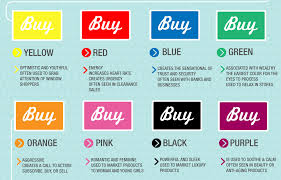
    Either you or your designer has to come up with the color scheme for your site.  Do colors matter?

    Why are financial reports often colored green?  Why do fast food restaurants use bright orange and yellow?  Colors express various feelings and influence our emotions.  Not all experts agree about the exact feelings and emotions that each color triggers, but there is some minimum agreement that each color can evoke positive or negative emotions.

    Buy Now
    Buy Now

    Red —strength or aggression
    Orange — warmth or frustration
    Yellow — optimism or anxiety
    Green — peace or boredom
    Blue — calm or coldness
    Purple — quality or decadence


  • Wednesday ”WResources” – Part-Time Business Ideas from “Educational Sites”

    Career experts say it’s much healthier to be continuously thinking about your opportunities rather than waiting for something bad or good to happen.  So even though you are happily employed, you’ve begun to start thinking about self-employment or a “working retirement.”  Your problem is that you are getting no quick inspirations or ideas.  Here are two research ideas to get your brain engaged.

    (1) Research your opportunities in your current field  – is consultant work available?  – Is there a subpopulation that is not being well-served by your industry that you could serve better in your own business?  – Is there some business or activity that they could “outsource” to you?

    (2) Explore and research new areas of work that interest you. Some fascinating ideas may emerge from some “educational sites” on your computer.

    Solution to Puzzle
    Ideas to Solve Your Puzzle

    To learn about new fields visit:

    Ed2go.com partners with more than 1800 colleges to offer online courses that can be used in your current line of work or in a new field.  Ed2go offers many courses in areas of computers and technology as well as in writing and publishing. It also offers “start-a-new-career” courses including: Pharmacy Technician, Pet sitting, Special Events Coordinator, How to Start an Arts and Crafts Business…..

    Fabjob.com sells guide books (~$15.00 – $30.00) on starting specific businesses or entering a new field. More than 100 guides are available including Become a:  

    Personal Chef                         Spa Owner
    Art Gallery Owner                 Technical Writer
    Dog Day Care Owner            Organic Farmer
    Genealogist                             Image Consultant
    Doula                                        Brewery Owner
    Party Store Owner                 Funeral Director
    Romance Writer                    Tea Room Owner
    Cake Decorator                     Coffee House Owner
    Fitness Club Owner               Virtual Assistant
    Personal Trainer                    Web Developer
    Life Coach                               Butler
    Real Estate Agent                  Psychic !!!!!

    At the very least, a visit to their website will getting you thinking about all the alternatives you have to not knowing what you want to do, unemployment, underemployment, involuntary retirement, failed retirement, retirement, or just not having enough money.

    OpenCourseWare (OCW) is a free and open digital publication of high quality university level educational materials.  These materials are organized as courses, and often include course planning materials and evaluation tools as well as thematic content.

    OpenCourseWare are free and openly licensed, accessible to anyone, anytime via the internet.  Whatever you may want to learn or train for, there is probably a site on line that provides you with online training or gives information on where you can obtain such training.  The consortium currently consists of 62 institutions offering 5,737 courses. A number of other institutions offer open courseware but are not part of this consortium including Harvard University and University of Massachusetts, Boston.

    If learning online or from a book is not your learning style.  Go online and look into what your community college is offering.  Besides courses leading to certificates and Associate degrees, many community colleges offer noncredit courses that can prepare you starting your own business.

    Online exploration and research is one way of discovering new options. More ideas for discovering your “perfect” part-time biz will be the focus of future posts.