Tag: planning for retirement

  • Why Do We Work? Why Do We Start Businesses?

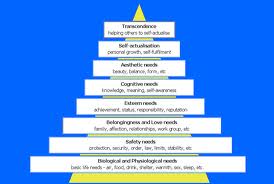
    Why do we work?   There are many reasons and some psychologists have used Abraham Maslow’s Hierarchy of Needs to explain why we work.  
    Hierarchy - Maslow
    Hierarchy – Maslow

    The basic needs, the physiological needs and safety needs, are at the bottom or the pyramid.  We work for food, safe housing, medical care, and security.  In the middle are our needs for belonging, love, self-identity, and self-esteem.  We may not expect to find love in the work force, but we would like respect in addition to feeling that our jobs match our self-identities and enhance our self- esteem.  The top level needs are for growth and not survival and might include beauty, justice, self-actualization, and knowledge.  According to Maslow we must have the lower level needs met before we can move upward to the higher needs.

     During the Agricultural Age and Industrial Age, most people worked to fulfill their basic needs.  Work was to pay the bills not to give you identity or self-esteem.  With the Information or Postindustrial era, the concept of work changed and we expected our jobs and careers to meet our higher level needs for belonging, self-esteem, and self-identity and maybe knowledge and self-actualization.  Only those who lacked an education worked for the basic needs.

     The Recession that began in 2008 changed things again.  People who once had positions that met their middle and upper level needs now find themselves unhappily working to secure the basics.  But the genie will not go back into the bottle.  Most of us want our work to be more than supplying our basic needs.  There were and are an abundance of books on how to get ahead in the workplace and if that  was not working out, there are the books that tell us how to escape from corporate America and start making money by being who you really are.  In other words, create a business based on something you feel passionate about.

    I teach Self-Assessment and Career Planning as a college course and write resumes.  My students and clients primarily want their careers to meet all their needs and provide them with financial security.  Oops the long-term financial security is no longer part of the social contract.  I also use the Life First – Work Second approach to career planning  that comes from Changing Course.com.  This coaching method asks what do you want your life to look like, before it asks what kind of work/business do you want to do.  It consists of one-three laser coaching sessions to help the client discover how to make money from their passion(s).

    Now I am finding passion to be a tricky component of starting a business.  Does your business have to be based on a passion?  Can it be based on a skill you have or based on a need in the community that you can meet without it being something you are passionate about?  What if your passion will not translate into a business of job – you’re passionate about baseball or opera – but you do not have the talent to work in these fields? (Of course, you might have the ability to write about them)  What about a passion to do anything that will make a lot of money and give you lots of leisure time?  (And there are plenty of websites that promise help you do this)

    Life first –work second.  What do you want your life to look like?  If your leisure time activities are really important to you, you certainly may want a business that provides plenty of leisure time.  If your life is your children  or grandchildren, then work should allow plenty of time with the kids.   Your business may be online, but it does not have to be. 

    Abel Gonzales Jr. works for24 consecutive days, 15 hours per day at the Texas State Fair, frying up a food that he “invented” – fried butter.  You can probably understand how inventing new tasty treats could be a passion, but 24 long days in the heat of Texas!  Abel makes enough in these 24 days for the rest of the year.  More than 11 months to do whatever else he wants .  (From Changing Course –Special Edition 9/15/13)   If creating new fried food sensations may be your passion, check out what has won prizes at the Texas State Fair.  http://www.bigtex.com/sft/Nav/foodinformation.asp

    All that leisure time would fulfill the needs of some of us and be a nightmare for others.   Assessing or knowing yourself is part of Life first.  If you are an Extrovert who gets your energy from being around people or  a person for whom work has always given structure to your life, having lots of leisure time will not fulfill your needs.  If you are a retiree who wants to start a business or are thinking of starting a business when your retire, there are many things you should consider and your need for structured time and time spent with other people are two of those considerations.

    What’s more important?  Money?  Passion?  Leisure?  Meeting some need?  Using your skills or talents?  Let the Halfpreneur know your opinion.

  • What Is a Halfpreneur?

    So what is a Halfpreneur?  I coined the term when I was taking a coaching course (Profiting from Your Passions) that was designed to help individuals change course and start their own businesses.  Most of my colleagues wanted to have full-time businesses and help others escape their cubicles and start their own businesses.  The trouble was that I liked my full-time job and the part-time business that I had on the side.  I liked having both and I knew many others who were part-time entrepreneurs and had “day jobs.”  So a halfpreneur had one foot in employment (paychecks, benefits) and one foot in self-employment (additional income, better use of talents or skills, passion, mission ….)  However, since creating this term, new definitions have kept emerging.

    True to my background as an educator, I can’t resist putting my definitions into categories and giving examples.

    Photographer, picture image
    Photographer

    THE TRUE HALFPRENEURS – those who work year round or have a continual passive income

    – New Biz Halfpreneurs –  the most entrepreneurial of the halfprenuers – those  who start new businesses and run them by themselves or with others.  Personally I know an industry sales manager who is also a part-time real estate agent; a full-time health care professional and Reiki Master who teaches Reiki and performs Reiki treatments; and  a full time social services worker who owns and manages a bar and employs the bartenders.

    –Professional Halfpreneurs – those who have a licensed profession, work for an organization and have their own private practice. Among my friends and acquaintances there is an agency social worker with a private practice and a teacher who offers tutoring.

    – “Artist” Halfpreneurs –  this includes artists, photographers, musicians, authors, speakers, and performers who work in their art and have a “day” job.

    –Craft Halfpreneurs–  those with a craft who work on their craft/”hobby” year round and sell their crafts at craft fairs, in consignment shops and/or online.  One of my colleagues gets free empty liquor bottles from bars and turns them into lamps.  He has friends who recycle liquor bottle glass into ornaments and cheese trays.

    –OnlineHalfpreneurs – those who do all their work online or by phone.  Online halfpreneurs may be coaches, internet marketers, affiliate marketers, or do online auctions.

    – MLM Halfpreneurs –  Due diligence is required for this option, but some MLM organizations are much better than others.  I know people who love and are doing very well in vitamin and jewelry MLMs.

    Decorated House
    Decorated House, picture image

    SEASONAL HALFPRENEURS – those who work only at certain times of the year

    Depending on the season:

    Winter – Christmas house decorator. (Decorate property and take down decorations after Christmas)


    Fall –Researching, organizing and leading October ghost tours.

    Summer – I worked with a client who decided with his wife to offer bass fishing outings (food, equipment instruction) to couples looking for a new shared out-of-doors leisure time activity.  Offering before and after daycare for summer camps is a godsend for parents whose work schedules don’t mesh with the 8:00am -3:00pm camp program.

    Spring/Summer – Yard sale shopper – buy “stuff” cheap and resell at profit in consignment stores, on Craig’s List, or online,

    Professor, picture image
    Professor

    CONTRACT HALFPRENEURS – those whose work is contractual

    –Adjunct professors – usually teach one or two courses per semester and the commitment of the college and the professor is over at the end of the term.


    –Online contractors – get work assignments for writing, graphic arts, web site development through fiverr.com, elance.com, or other sites.

    Trailer, picture image
    Trailer

    ASSET HALFPRENEURS – those with something to rent

    –The Landlord – owns property and rents out apartments, rooms, or a summer home.

    –The Mini-landlord – rents out an empty garage,  extra storage space, space for yard sales, or a garden.

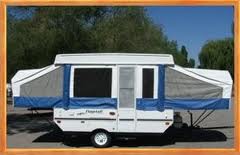
    –The “Rental Agent” – briefly rents out his or her boat, camper, rototiller, cement mixer

    Landscape, picture image
    Landscape

    LOOK BEFORE YOU LEAP HALFPRENEURS – those who start a business while still employed as a trial run to see if their business is something that they really want to eventually pursue full time or to see if their entrepreneurial idea is even feasible.


    Consultant, picture image
    Consultant

    ENCORE HALFPRENEURS – individuals over 50 who start new businesses or are in the process of planning/starting a business as they continue working.  The Encore Years have been roughly defined as 50 to 70+.  Encore halfpreneurs have often thought earlier in life of starting businesses but as older, experienced adults, the timing now seems right.  Many gravitate to consulting, public speaking, writing, coaching, although I know one woman who makes and sells jewelry. Younger encore halfpreneurs may return to school to get the training or credentials that might be needed for their future business.

    Working Retiree, picture image
    Working Retiree

    RELUCTANT HALFPRENEURS – half-hearted, reluctant individuals who never saw themselves as entrepreneurial, but now are unable to find suitable, well paying positions.

    –Forced early retirement  – the early retirement package could not be turned down, but they are not ready to be retired and meaningful or adequate paying jobs are not coming through.  They know that somehow their expertise, interests, or passions could become the foundation of their own business.

    – Running out of money retirees – retirement was great but either they overspent or their nest egg has vanished during the Great Recession. Not wanting to be a greeter or work in a fast food restaurant, they may somewhat reluctantly decide to use their skills and start a small business.

    –Long-term Unemployed – the options have become Welfare (Transitional Assistance), trying to convince a doctor and the government that you are disabled, or figuring out if you have what it takes to start a business that will provide  some financial security and a needed boost to your self-esteem and self-efficacy.

    Let me know if I need to put another category on my list.